
How can you reinvent your ways of working, your products, or your innovation strategy by observing nature’s proven solutions? For decision-makers, biomimicry goes beyond simple inspiration: it’s a practical approach to breaking down silos and opening up new avenues, especially during a strategic seminar or a corporate conference. A speaker on biomimicry grounds this topic in the reality of your sector — energy, industry, services — and engages your teams with compelling, immediately actionable examples.

Choosing the right speaker on biomimicry also means finding the right balance between academic insight and operational experience. Our speakers tailor their presentations to your organisation’s level of maturity, turning curiosity into concrete innovation drivers. Whether you want to spark collective awareness or launch a cross-functional project, their expertise helps organisers give meaning to every key moment of your event.

Read more Read less

When the room becomes a forest of ideas: the biomimicry effect at seminars

Forget standard presentations: inviting a speaker on biomimicry transforms every seminar into a space for collective exploration. Here, nature isn’t just a visual anecdote: it becomes a source of wonder, pushes teams to think outside the box, and inspires original solutions. The effect is immediate: attention increases, imagination is awakened, and cohesion is built around real-world challenges that nature has already solved.

A biomimicry conference is not just about sharing knowledge: it sparks tangible realisations. Participants leave with actionable ideas, ready to cultivate new practices in their organisation, inspired by the diversity and resilience of the natural world.

Innovate like an anthill: who in your organisation should hear about biomimicry?

The strength of biomimicry lies in its ability to speak to every profession: R&D teams seeking breakthroughs, leaders wanting to rethink their vision, HR looking for unifying workshops, or operational teams eager for practical levers in their daily work. A speaker on biomimicry reaches both strategic decision-makers and frontline staff, because nature speaks a universal language that breaks down silos.

This topic also appeals to sustainability and innovation managers, who see biomimicry as a bridge between environmental impact, efficiency, and creativity. The result: every audience finds their own spark, tailored to their specific challenges.

From beetle to brainstorming: what makes a biomimicry conference unforgettable

What stands out after a biomimicry conference? It’s those moments where science meets wonder: dew inspiring revolutionary packaging, termite mounds changing the game in passive cooling. The best speakers tell these stories with passion and, above all, show how they translate into your sector.

It’s not jargon that captivates, but the speaker’s ability to connect the performance of natural ecosystems with business challenges. The audience leaves with a method: observe differently, dare to experiment, and build on the robustness of the living world.

Lespeakers, your compass in the jungle of biomimicry experts

Deciphering backgrounds, choosing the right specialism, ensuring impact: that’s the art of a specialist agency like Lespeakers. We select profiles able to make biomimicry accessible, adapt to your context, and spark the shift from curiosity to action within your teams.

Every organisation and every event requires a tailored approach. By entrusting us with your project, you benefit from personal support and in-depth expertise, ensuring your biomimicry conference becomes a milestone in your innovation journey.

Discover our speakers and experts on biomimicry

We help you find the right speaker

Share your needs with us: we'll contact you in under an hour.

After a quick exchange, we'll come back with a tailored selection of speakers.

Confirm your choice and sign off with your selected speaker.

Get a tailored speaker shortlist
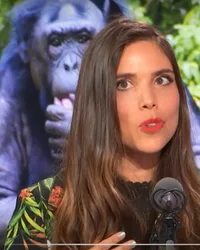
Aïna Queiroz, biomimicry speaker

Aïna Queiroz

Researcher in biology, Speaker, Author and Podcast Producer

Spoken languages
French, English

Researcher in biology, initially trained at CNRS, Aïna Queiroz led scientific Research and Innovation for 10 years within SMEs and large groups. A specialist in biomimicry, her work has taken her to the four corners of the world: from Japan to Costa Rica, she studies self-medication in great apes and the symbioses between marine organisms. She also explores exceptional longevity by conducting ethnobotanical surveys…

Frequently asked questions about speakers on biomimicry

What budget should you plan for a speaker on biomimicry?

The budget for a speaker on biomimicry mainly depends on the speaker’s profile, the duration of the session, and the desired format (conference, workshop, round table). Generally, you should expect to pay between €2,500 and €7,000 for a standard corporate session. Some highly recognised or in-demand speakers may exceed this range. Also consider possible travel expenses if the speaker is not local. A detailed brief often helps optimise the budget, especially if your event includes interactive exchanges or a Q&A session rather than a traditional lecture format.

How do I choose a speaker on biomimicry suited to my audience?

To select a relevant speaker on biomimicry, start by defining your objective: general awareness, managerial inspiration, or practical application. Some speakers focus on making the topic accessible and providing concrete examples, while others target specific sectors (industry, innovation, HR). Consider the desired technical level and the type of audience: an R&D team will have different expectations from a board of directors. Requesting videos of previous talks can help you assess the speaker’s style and teaching approach.

What formats can a speaker on biomimicry offer at a seminar?

A speaker on biomimicry can deliver a short session (30 to 45 minutes to set the scene and open perspectives), an interactive conference (with questions integrated during the presentation), or a practical workshop to experiment with nature-inspired methods. Some also offer case studies followed by targeted discussions on your sector’s challenges. The format will depend on your schedule, the number of participants, and how involved you want the audience to be.

What mistakes should you avoid when choosing a speaker on biomimicry?

A common mistake is choosing a speaker on biomimicry solely based on their scientific CV without checking their ability to make the topic relevant for a non-specialist team. Another pitfall is overlooking the fit with your company culture or the audience’s expectations. A speaker who is too technical may lose the audience, while a talk that is too general can frustrate more knowledgeable participants. Finally, failing to specify your event’s context in the brief can limit the relevance of the presentation.

Can a speaker on biomimicry adapt to an audience with little exposure to innovation?

Yes, as long as you choose a speaker on biomimicry who is used to making the topic accessible and illustrating their points with concrete examples from everyday life or the audience’s sector. Some speakers excel at linking biomimicry to business challenges without jargon. It’s helpful to specify your audience’s familiarity with the topic in advance so the speaker can adapt their approach, perhaps favouring simple analogies and practical cases over pure theory.

How long does a typical biomimicry session last?

Most biomimicry sessions in companies last between 45 minutes and 1.5 hours, depending on the format and objectives. For a short seminar, the presentation can be condensed into 30 minutes, but most organisations opt for an hour, allowing time for discussion and questions. If you want a workshop or hands-on session, plan for 2 hours to half a day. Adjusting the duration helps avoid information overload and supports the adoption of new concepts.

How can you measure the impact of a speaker on biomimicry after the event?

The impact of a speaker on biomimicry is rarely immediate. However, you can survey participants straight after the event to see what they remember, then assess a few weeks later whether any ideas have been taken up or adapted in internal practices. Some companies follow up with a workshop or innovation challenge inspired by the conference. A good sign: when the speaker’s vocabulary or examples are spontaneously reused in meetings or informal discussions.

Does Lespeakers offer support to help refine the choice of speaker on biomimicry?

Yes, Lespeakers supports each organisation in selecting the speaker on biomimicry best suited to their needs. The team takes the time to understand your context, objectives, and audience composition to refine their recommendation. You can request feedback, video clips, or arrange a preliminary meeting with the proposed speaker to ensure the right fit before making a decision.