Now is the perfect time to give your teams a fresh perspective on their daily interactions. A speaker on nonverbal communication offers practical insights into the signals, attitudes, and micro-expressions that shape group dynamics, far beyond words. Whether you want to improve communication within your executive committee or add depth to a corporate conference, mastering these codes paves the way for more effective and authentic working relationships.

Comparing profiles of speakers on nonverbal communication also means choosing the right tone to inspire trust, cohesion, or leadership at a seminar. Expertise on this topic allows for live demonstrations of the real impact of nonverbal cues on decision-making and management quality. For HR managers and event organisers, it’s a guarantee of delivering an immediately tangible benefit to all participants.

Read more Read less

What your gestures reveal when words stop

In the workplace, every handshake, posture, or glance often says more than a thousand speeches. A speaker on nonverbal communication highlights these silent signals that shape exchanges and negotiations. Understanding this language opens up a new dimension of collaboration, where trust is sometimes built even before the first word is spoken.

During a nonverbal communication conference, participants learn how to decode these hidden codes and adopt simple tools to smooth relationships. This collective awareness brings lasting change to team dynamics, beyond what’s visible on the surface.

The power of silence: the mirror effect at your seminars

A seminar or convention also thrives on what remains unsaid. Choosing a session focused on nonverbal communication creates common ground, even among very different profiles. The speaker on nonverbal communication encourages everyone to get moving, experiment, and observe the impact of a posture or a smile on group cohesion.

This type of session stands out for its participative approach and the immediate application of new skills. Interactions become more genuine, tensions ease, and new habits are naturally integrated into the company culture. This is often where the magic happens—on the nonverbal level.

Managers, HR or sales: who really perceives the invisible?

Nonverbal communication isn’t just for experts or trainers. Managers, HR professionals, sales teams—all benefit from a better understanding of body language, whether to motivate, persuade, or defuse a potential conflict. A nonverbal communication conference enables every audience to take away tools tailored to their own challenges.

This cross-functionality makes the topic universal within the company. Everyone leaves with practical keys, from the manager leading meetings to the salesperson analysing client reactions in real time.

Tailored to decode the unique atmosphere of your event

Every event has its own dynamic, and nonverbal communication never plays exactly the same role. At Lespeakers, we identify your needs to find the speaker on nonverbal communication who will resonate with your audience. The goal: to encourage engagement naturally, in a welcoming and stimulating atmosphere.

We help you turn your nonverbal communication conference into a memorable experience that stays with participants and has a lasting impact. Because decoding invisible signals also means knowing how to capture your teams’ attention at every moment of the event.

Discover our speakers and experts on nonverbal communication

We help you find the right speaker

Share your needs with us: we'll contact you in under an hour.

After a quick exchange, we'll come back with a tailored selection of speakers.

Confirm your choice and sign off with your selected speaker.

Get a tailored speaker shortlist
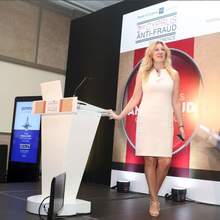
Nadine Touzeau, non-verbal communication speaker

Nadine Touzeau

Profiler, net-profiler, researcher in behavior of cybercriminals - Author - Speaker

Spoken languages
French, English

Profiler, net-profiler, researcher in behavior of cybercriminals who has developed theories on "Behavioral Differentiations between the Real and the Virtual" and has published several scientific articles in the USA, including 9 in the first year. International scientific speaker in neuroscience, Forensic and behavior. Director of Behavioral Consulting: https://www.conseilencomportement.com/ University Professor i…

Frequently asked questions about speakers on nonverbal communication

What budget should you plan for a speaker on nonverbal communication?

For a speaker on nonverbal communication, typical budgets range from €2,500 to €8,000 depending on their reputation, the duration, and the level of customisation. The main factors are how tailored the content is (examples from your sector, workshops on your specific challenges) and the speaker’s ability to interact with your audience. Some profiles include practical modules or live case analyses, which can affect the price. Don’t forget to factor in additional costs (travel, accommodation). It’s best to discuss your expectations openly to avoid any budget surprises.

How do you choose a speaker on nonverbal communication for a corporate seminar?

Choosing a speaker on nonverbal communication should be based on your objective (awareness, training, motivation) and your participants’ profiles. Favour a speaker who adapts their approach to your company’s reality: they should be able to decode situations familiar to your teams, not just stick to generalities. Ask for examples of similar sessions, and check if they offer a demo or a preparatory call. A good sign: they show interest in your context and ask about your challenges, not just the logistics for the day.

What format works best with a speaker on nonverbal communication?

An interactive format works particularly well for nonverbal communication. Practical demonstrations, group exercises, or analysis of real-life situations are more engaging than a traditional lecture. Some speakers offer workshops where participants try out techniques themselves, which helps with retention. For an audience of managers or executives, allowing time for discussion at the end lets you address specific cases and answer questions relevant to your organisation.

What mistakes should you avoid when choosing a speaker on nonverbal communication?

A common mistake is choosing a speaker solely based on their CV or publications, without checking their ability to make the topic lively and practical. With nonverbal communication, a speaker who is too theoretical quickly loses the audience. Be wary of overly generic talks or promises of ‘foolproof methods’: every company culture has its own codes, and a good speaker must be able to adapt. Finally, avoid imposing a format that’s too tight, leaving little room for questions or hands-on activities.

Can a speaker on nonverbal communication engage a sceptical or unresponsive audience?

Yes, provided you choose a speaker on nonverbal communication with experience handling challenging audiences. The best speakers capture attention with concrete examples from professional life and live demonstrations. They often use humour or surprise to break down resistance and spark curiosity. If you expect a lukewarm reception, mention it in the briefing: the speaker can then prepare specific hooks or involve the audience right from the start.

How long does a speaker on nonverbal communication usually present for?

A typical session on nonverbal communication lasts between 45 and 90 minutes, depending on how much interaction and practical work is included. Less than 45 minutes makes it hard to cover more than the basics. Some formats include workshops or debriefs that can extend to half a day. If time is short, focus on a key message or a very targeted approach, and consider following up with resources or post-event support.

Can the content of a nonverbal communication session be adapted to our sector?

Yes, an experienced speaker on nonverbal communication will illustrate their points with situations relevant to your teams, whether it’s client relations, management, or negotiation. During the briefing, share typical scenarios or challenges from your sector: the speaker can then tailor their session, even including role-plays inspired by your daily work. This adaptation often makes all the difference in terms of engagement and take-up by participants.

How can you measure the real impact of a speaker on nonverbal communication after the event?

The impact of a speaker on nonverbal communication is rarely measurable immediately. Plan a feedback session 2 to 4 weeks later: observe meetings, client interactions, or the atmosphere during presentations. Some organisers collect anonymous feedback to gather perceived changes. You can also ask the speaker to provide self-assessment tools or exercises for teams to repeat. This helps embed the learning and measure real changes in practice.