
Attending a talk that only skims the surface of how the brain works does not have the same impact as listening to a speaker on neurosciences who knows how to translate the latest advances into practical levers for your teams. It’s not just a matter of content: the real difference lies in the ability to connect science to operational challenges, to answer questions that arise around decision-making, motivation, or change management—where too many talks remain theoretical.
Choosing a speaker on neurosciences means offering your seminar or corporate conference a solid and accessible perspective on human functioning. For HR managers or organisers, it means being able to rely on an expert who knows how to tailor their message to your context, illustrate with concrete examples, and generate real awareness among the audience. This approach is crucial to transform a simple listening session into a memorable, useful, and impactful moment for all participants.
Read more Read less
The collective brain at your seminar: when neurosciences create surprise
Forget simply transmitting knowledge: a neurosciences session transforms how your team perceives decision-making, attention, or stress management. At a seminar, a speaker on neurosciences does more than just present concepts—they challenge mental habits, spark new insights, and encourage unexpected exchanges. The impact is not just measured by the enthusiasm in the moment, but by the new dynamics that take root in the company long after the event.
This “reset” effect is particularly striking: a neurosciences talk gives participants tools to better understand their own reactions and those of their colleagues. The result? Seminars that leave a lasting impression, far from the sessions where everything is forgotten the next day.
Synapses in action: what makes a session truly memorable
Not all talks are created equal. On the topic of neurosciences, the difference lies in the lived experience. The most impactful sessions are those where every participant is challenged in their habits, invited to experiment rather than just listen. This ranges from interactive exercises to anecdotes from the latest research, which connect the company’s real-world challenges with the complexity of the human brain.
A speaker on neurosciences who truly engages their audience is not afraid to overturn preconceptions: why does our brain favour the status quo? How do unconscious biases influence our collective decisions? The sessions that people talk about long after the event are those where they leave with personal breakthroughs.
HR, managers, innovation: who benefits from connecting the brain and business?
A neurosciences talk goes beyond traditional training. Human resources, team leaders, heads of innovation or change management—all benefit from scientific insights into engagement, learning, or leadership mechanisms. The dialogue between neurosciences and business reveals unexpected levers for uniting teams, supporting transformation, or boosting collective agility.
Whether you want to inspire your managers or equip HR with new tools to support teams, choosing a speaker on neurosciences enriches strategic thinking with methods validated by research. It’s an asset for any organisation that wants to evolve its practices beyond simply instructing people to change.
Our compass: finding the voice that makes science accessible to your teams
At Lespeakers, we know it’s not enough to find an expert. What makes the difference is the speaker’s ability to embody science and anchor it in the reality of business. Our approach is to select, for each context, the profile whose teaching skills, charisma, and real-world experience make neuroscientific concepts resonate with your audience.
Whether it’s to energise a board meeting, boost a team day, or open new horizons at a convention, we listen to your needs to recommend the neurosciences talk that will leave a mark. With Lespeakers, every session aims for that intellectual spark—but also the one that translates into collective action.
How to choose a speaker for a conference on neurosciences?
 Top 5 french speakers on neuroscience
Discover our top neuroscience speakers, recognized experts in their field. Find the ideal speaker for your event.
Read- Which speaker should you choose for a conference on neuroscience?
Which speaker should you choose for a conference on neuroscience? Compare the approaches, target audiences, and specificities to match the right profile to you…
Read
Discover our speakers and experts on neurosciences
We help you find the right speaker
Share your needs with us: we'll contact you in under an hour.
After a quick exchange, we'll come back with a tailored selection of speakers.
Confirm your choice and sign off with your selected speaker.
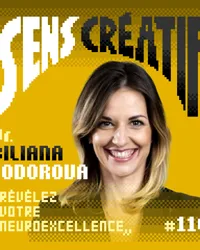
Biliana Todorova
International Speaker • Doctor of Science • Expert in Individual and Collective Performance • Passionate about the Brain
- Spoken languages
- French, English
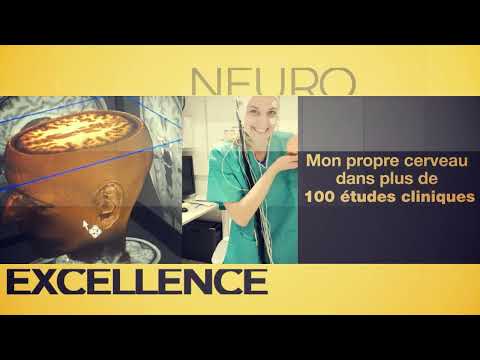
Many people are interested in the brain and neuroscience, but no one in the world has submitted their own brain to more than 100 clinical studies. Biliana has done it! She has been so obsessed with understanding this powerful yet misunderstood organ that she has undergone dozens of MRI scans, electroencephalograms (EEG), and magnetoencephalograms (MEG). She even agreed to take two medications - Ritalin and Ketamine…

Ben Campagna
Multidisciplinary expert in chronic stress and sustainable performance, Ben Campagna supports leaders and management teams from exhaustion to resilience and alignment.
- Spoken languages
- French, English
Ben Campagna is an international speaker, executive coach, and specialist in human behavior, sustainable performance, and human optimization. With an academic background in psychology and sports sciences, combined with advanced training in behavioral change, neuroscience, emotional intelligence, physiology, and performance coaching, he has spent over 12 years working with executives, management teams, and high-perf…
Alice Pailhès
Doctor in Psychology | Mentalist Magician | Speaker | Author
- Spoken languages
- French, English
Dr. Alice Pailhès is a doctor in psychology, magician, and researcher. She invites her audience to experience a disturbing experience: discovering how much our perception of reality, our decisions, our attention, and our beliefs can be influenced without our awareness. Through magic demonstrations rooted in cognitive sciences, she does not just explain how the human mind works: she makes it visible, tangible, and e…
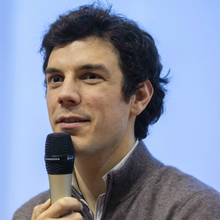
Artus De longuemar
🎤 Expert in Augmented Intelligence
- Spoken languages
- French, English
☑️ WHAT DO I DO? I am an expert in Augmented Intelligence: a symbiosis of human and artificial intelligences for business performance. I speak at plenary sessions, design your seminars, and facilitate your project meetings. ☑️ RESULTS: at Airbus, I introduced “Management 3.0” in 2011, impacting the performance of 1000 employees. In 2018, I was elected to the board of directors of the "Lab RH" which grew from 50 to…
Alex Si
Magician-Mentalist | Speaker | Author
- Spoken languages
- French, English
Alex fights against the illusions that block performance in business. Alex blends art and science. He combines 15 years of experience as an IT consultant, and over 15 years of studying the arts of magic and mentalism at the McBride Magic & Mystery School (Las Vegas.) Although he creates them daily, he still sometimes succumbs to the illusions of everyday life. That’s why Alex inspires his participants to overcome…
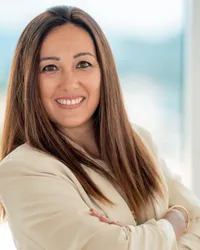
Julie Saucerotte
Speaker on Neurosciences, Leadership, and Impactful Communication
- Spoken languages
- French, English
Julie combines 3 areas of expertise: - PhD in Pharmacy: Neurosciences, stress physiology, and decision-making clarity - RNCP Sophrologist: body anchoring, nervous system regulation, and confidence - Actress trained in a professional acting school: stage presence, voice, and body language 3 disciplines serving a single goal: to support leaders and managers in uniting their teams and creating sustainable engagement.…
Conferences
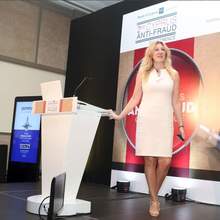
Nadine Touzeau
Profiler, net-profiler, researcher in behavior of cybercriminals - Author - Speaker
- Spoken languages
- French, English
Profiler, net-profiler, researcher in behavior of cybercriminals who has developed theories on "Behavioral Differentiations between the Real and the Virtual" and has published several scientific articles in the USA, including 9 in the first year. International scientific speaker in neuroscience, Forensic and behavior. Director of Behavioral Consulting: https://www.conseilencomportement.com/ University Professor i…
Frequently asked questions about speakers on neurosciences
What budget should you plan for a speaker on neurosciences in a corporate setting?
For a speaker on neurosciences, fees vary greatly depending on the speaker’s reputation and experience, the format requested (talk, workshop, panel), and the preparation time required. In practice, fees are often between €2,500 and €7,000 (excl. VAT) for a one-hour session, excluding additional costs such as travel. Expect a supplement if you want a highly customised session or interactive workshops. The price does not always guarantee relevance for your audience: always ask for examples of previous sessions or feedback from companies similar to yours.
How do you choose a speaker on neurosciences suited to my executive committee?
A speaker on neurosciences for an executive committee must master the link between scientific discoveries and business decision-making. Beyond academic background, check their ability to illustrate complex concepts with real-life business cases. Ask how they adapt their message for a leadership audience and whether they are used to addressing topics such as stress management, rapid decision-making, or change management. A good speaker will also handle challenging questions and encourage dialogue—not just run through a slideshow.
What mistakes should you avoid when choosing a speaker on neurosciences?
The first mistake is to select a speaker solely based on their scientific reputation, without checking their teaching skills or ability to engage a non-expert audience. Another common mistake is to overlook the alignment between the speaker on neurosciences’ message and your company’s specific challenges. Finally, don’t neglect preparation: a good speaker will always ask for a detailed brief and know how to clarify your expectations. Also, be wary of overly generalist profiles who only scratch the surface of the topic.
Can a speaker on neurosciences make their session interactive?
Yes, many speakers on neurosciences now include practical exercises, live tests, or fun demonstrations to illustrate concepts such as memory, attention, or decision-making. This works especially well to break the ice or engage a challenging audience. If you want a participative element, mention it from the outset: some speakers even offer mini-experiments or quizzes to demonstrate brain mechanisms in a concrete way, which helps anchor the messages.
What session format is recommended for an event on neurosciences?
The format depends on your objective: to raise awareness in a large group, a 45- to 60-minute talk with a Q&A works well. For smaller groups or committees, a two-hour interactive workshop allows you to go deeper with real-life cases. Some also choose hybrid formats, such as a keynote followed by a practical workshop. Find out how keen your teams are on interactivity: a speaker on neurosciences will adapt, but the more involved the group, the more lasting the impact.
How can you measure the impact of a speaker on neurosciences after the event?
The impact of a speaker on neurosciences is rarely measured immediately. Plan a short survey right after the session to gather initial reactions, but follow up a few weeks later: have you noticed new habits in meetings, changes in stress management, or the adoption of tools shared during the talk? Some HR teams update their management practices after this type of session, which is a good indicator. Also ask the speaker if they can provide additional resources or offer a follow-up session.
Is a speaker on neurosciences suitable for an audience with little prior knowledge?
Yes, provided you choose a speaker on neurosciences with experience in making complex topics accessible. Some speakers are excellent at explaining difficult concepts using everyday professional examples. If your audience is not used to scientific topics, favour profiles who can tell stories, use anecdotes, and avoid jargon. Ask how they adapt their message for very operational or non-scientific audiences—this often reveals their teaching skills.
Can Lespeakers help with choosing a speaker on neurosciences?
Yes, Lespeakers works with you to analyse your event context, participant profiles, and objectives to identify the most relevant speaker on neurosciences. The agency offers a consultation to refine your requirements and present suitable profiles, considering criteria such as sector experience, ability to lead a debate, or tailor their session. This support also includes checking availability, handling logistics, and follow-up right up to the event day.