

Would you like to open up the conversation about inclusion at your next seminar or convention? When teams take the time to rethink their practices, the presence of a speaker on accessibility can transform perceptions and bring fresh momentum to your approach. This external perspective, from an expert in accessibility issues, puts the real-life experiences of those concerned at the heart of the discussion and encourages everyone, including management, to go beyond mere compliance.
Choosing a speaker on accessibility for a corporate conference helps your teams better understand what it truly means to “welcome everyone”, with a focus on solutions, feedback, and overcoming barriers. Our selection helps you compare different profiles so you can choose the one who will best illustrate the impact of accessibility on collective performance and internal cohesion, making your event a decisive moment for inclusion.
Read more Read less
When inclusion changes the game at your professional events
Inviting a speaker on accessibility is much more than adding another topic to the agenda. It gives your teams a mirror of their professional reality, revealing areas for improvement that may have gone unnoticed. Far from being just a reminder of regulations, these talks open up real dialogue about daily obstacles and ingenious solutions that make a difference for all employees.
An accessibility conference leaves a lasting impression when it transforms collective vision. The stories and scenarios presented encourage everyone to question their own practices, fostering immediate and lasting awareness around inclusion. This new momentum is felt as soon as teams return to work, benefiting the working atmosphere and team cohesion.
Accessibility: a topic that goes far beyond HR
Often seen as the exclusive domain of HR or management, accessibility actually concerns every level of the company. From managers to support teams and operational departments, everyone has a role to play in making the workplace more inclusive.
Bringing in a speaker on accessibility at your seminars unites all professions around a common goal: creating a working environment where everyone belongs, whatever their needs. This cross-functional approach values the complementarity of talents and uncovers new strengths within your organisation.
Talks that turn inclusivity from words into action
What sets a powerful accessibility conference apart is its ability to go beyond theory. Specialist speakers focus on concrete examples, real-life business cases, and tools that can be applied straight away. Participants leave with clear ideas for adapting their environment, communication, or processes.
This pragmatic approach gives inclusion a very practical dimension. By drawing on employees’ real experiences, a speaker on accessibility helps drive collective action and encourages co-creation of solutions tailored to your company’s reality.
Lespeakers: a sharp eye to find your voice for inclusion
Selecting the right profile for an accessibility conference is not something to improvise. We analyse each context to identify the speaker who can engage with your teams, whether the aim is to raise awareness, train or inspire. Our expertise: finding speakers who combine lived experience, teaching skills and emotional impact.
With Lespeakers, you benefit from personalised support, from defining your needs to preparing the talk. Our goal: to make your event a catalyst, where inclusion is no longer just a word but comes to life through authentic and inspiring voices.
Discover our speakers and experts on accessibility
We help you find the right speaker
Share your needs with us: we'll contact you in under an hour.
After a quick exchange, we'll come back with a tailored selection of speakers.
Confirm your choice and sign off with your selected speaker.
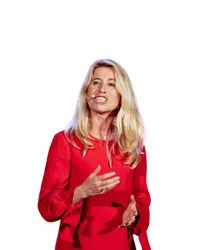
Virginie Delalande
Speaker, author, TV host, founder of Kiffe ton handicap and World with Women
- Spoken languages
- French, English
- Speaking locations
- Dans le monde entier
Top Speaker • Top Voice LinkedIn • Knight of the National Order of Merit • Medal of the National Assembly • Cover of Forbes 2022 Virginie Delalande is an international speaker, author, and TV host. The first profoundly deaf lawyer born in France, she now supports companies on three decisive issues: re-energizing teams, evolving leadership practices, and transforming diversity into a true lever of performance. Her…
Frequently asked questions about speakers on accessibility
What budget should you plan for a speaker on accessibility?
The fee for a speaker on accessibility generally ranges from €2,000 to €6,000 depending on their profile, the preparation required, and the format. Plan a realistic budget, taking into account any logistical costs if your speaker needs to adapt materials or travel to meet specific accessibility requirements. An experienced speaker on this topic will often have suitable equipment (such as captioning, interpretation, accessible materials), which can affect the total cost. To avoid surprises, ask for a detailed proposal including all planned adaptations.
How do you choose a speaker on accessibility for a corporate seminar?
First, check that the speaker has hands-on experience with accessibility in business, not just theoretical expertise. Look for evidence in their past talks that they can address inclusion from practical angles relevant to your sector. A good speaker on accessibility will tailor their message to your industry and illustrate their points with real-life examples, often from collaborations with companies. Ask to see video clips or arrange a preliminary conversation to assess their teaching style and ability to engage a diverse audience.
What mistakes should you avoid when choosing a speaker on accessibility?
Many people choose based on an impressive CV, but a speaker on accessibility also needs to be able to make complex topics accessible and engage even a novice audience. Avoid selecting someone who is too technical or activist, as this can lose your teams’ engagement. Another pitfall: overlooking the diversity of expertise—some speakers focus only on physical or visual disabilities, whereas accessibility also includes digital ergonomics, communication, or welcoming practices. Finally, make sure the speaker tailors their talk to your internal challenges, not just their own background.
What types of speakers on accessibility are suitable for executive management?
For a board or executive committee, choose a speaker on accessibility who has already advised decision-makers or supported large-scale transformations. This type of speaker knows how to link accessibility to overall performance, management, and the company’s reputation, beyond regulatory compliance. Hybrid profiles—practical experts who also understand strategy—are particularly effective at delivering concrete messages and putting inclusion issues into perspective for leadership.
What is the best format for a talk on accessibility at an event?
It depends on your objectives: to raise awareness without disrupting the schedule, a 45-minute to 1-hour conference works well. To kick-start changes in practice, an interactive workshop or a feedback session followed by Q&A creates more engagement. Make sure to allow time for exchanges with the speaker on accessibility: participants often have very practical questions about workplace situations. Finally, plan for the accessibility of the venue and materials to set an example from the outset.
How can you measure the impact of a speaker on accessibility after the event?
Impact is not just about attendance or applause. Qualitative feedback is valuable: gather immediate reactions on the clarity of the messages, the speaker’s ability to provide practical ideas, and how well the talk related to your company’s reality. In the medium term, see if the topic comes up in internal discussions or if new initiatives emerge (working groups, process adjustments, idea sharing). A good speaker on accessibility rarely leaves an audience unmoved, even with groups that are considered challenging.
How long should a speaker on accessibility talk to keep the audience engaged?
A talk on accessibility works best between 30 minutes and 1 hour 15 minutes, depending on the depth of the topic and the chosen format. Beyond an hour, it becomes difficult to hold the attention of a non-specialist audience, unless you alternate presentation, stories, and interaction. For a packed seminar, opt for a short but impactful talk, followed by time for questions or a practical workshop to move from words to action. The key: adapt the length to your teams’ actual availability, not just a standard format.
Can a speaker on accessibility adapt to an audience with little awareness of inclusion?
Yes, this is actually one of the key criteria to check when making your selection. An experienced speaker on accessibility knows how to start from common perceptions—even misconceptions—and build an accessible, jargon-free talk. They use real-life situations, stories from the field, and avoid moralising. For audiences with little prior exposure, humour or sharing real failures often works better than an institutional speech. Be sure to specify your audience’s level of awareness in the briefing so the speaker can adapt their tone and content.