El Alaoui Naoual
Consultant, speaker, and coach
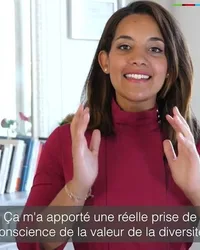
Naoual El Alaoui, Consultant and Coach, Expert in universal accessibility and inclusive approaches within onepoint. Naoual El Alaoui is a committed woman determined to advance the cause of women and disability. A graduate of Skema Business School, Naoual quickly understood that she had to turn her differences and identities into a value for the company and society.
Prices
- Conference : 4000 €
Localization
Languages
My conferences
Culture of Diversity
As a woman of Maghreb origin, beautiful, young, and disabled, I embody all these differences that sometimes disturb and sometimes amuse... So, as soon as I became aware of this, I committed myself to diversity issues for over 8 years, notably joining the 21st Century Club, the Mozaik Foundation, and the Inclusion Manifesto... I am a woman in technology, and it is technology that led me to join my current company. And because I have been evolving in the Tech world for almost 4 years, where women are still underrepresented, I understand the importance and stakes of diversity. Giving women the desire and opportunity to thrive in all sectors allows companies to access all talents. The value of diversity is now a given, yet it is still not a reality.
Singularity or plurality?
Diversity is a vast subject, because it is plural: it concerns gender, origin, disability... And I embody it. I dare and have the audacity to say it: I am a woman, I am a committed and determined woman, Franco-Maghrebian; beyond my diversity, what matters is inclusion. I really like this phrase by Verna Myers: 'Diversity is being invited to the party. Inclusion is being asked to dance.' In other words, diversity is the juxtaposition of differences, while inclusion is giving everyone the opportunity to contribute their stone to the building. Difference is not always what we think. Did you know that 80% of disabilities are invisible? Or that 20% of the French population is disabled, and that this figure rises to 40% if we count temporary disabilities? When we talk about diversity and inclusion, we focus on ethical and moral issues and sometimes neglect the business dimension. But diversity and accessibility are also performance issues. Look around you: your remote control was designed for people with reduced mobility, texts for the mute, subtitles for the deaf and hard of hearing... But whoever you are, these solutions make your life easier and are therefore potentially business levers. Each of us has a lot to contribute to the collective, provided that a healthy and constructive dialogue is established. We need to create cross-functional networks to speak up and exchange ideas. That’s how we overcome prejudices, discover business opportunities, and create a sense of belonging.
From Inclusion to Universal Accessibility
What is universal accessibility? Universal accessibility is the access "to everything for everyone", access to any building or facility that allows, under normal operating conditions, people with disabilities*, with the greatest possible autonomy, to move around, access premises and equipment, use equipment, orient themselves, communicate, and benefit from the services for which this establishment or facility was designed. Is universal accessibility just for people with disabilities? In building the solution "Handi’CAP and Universal Accessibility", I studied and analyzed the uses and needs of people with disabilities, the elderly, women, men, children, foreigners... All the difficulties related to products, services, and uses are studied, analyzing the inclusion of all to go beyond the obvious that one might have of a product or service at a given moment. This allows for products and services accessible to everyone, at any time and in any place or medium. We have developed digital accessibility by relying on the RGAA reference framework. To facilitate the implementation of digital accessibility, the Interministerial Directorate of Digital has been publishing since 2009 the general reference for improving accessibility – RGAA, created to implement Article 47 of the 2005 Disability Law and its application decree updated in 2019. When we talk about diversity and inclusion, we focus on ethical and moral issues and sometimes neglect the business dimension. But diversity and accessibility are also performance issues. Look around you: your remote control was designed for people with reduced mobility, text messages for the mute, subtitles for the deaf and hard of hearing... But whoever you are, these solutions make your life easier and are therefore potentially business levers. Each of us has a lot to contribute to the collective, provided that a healthy and constructive dialogue is established. We need to create cross-functional networks to speak up and exchange ideas. That’s how we overcome prejudices, discover business opportunities, and create a sense of belonging. What if we all got to work on this?