
Elodie Gentina - Speaker on generation z
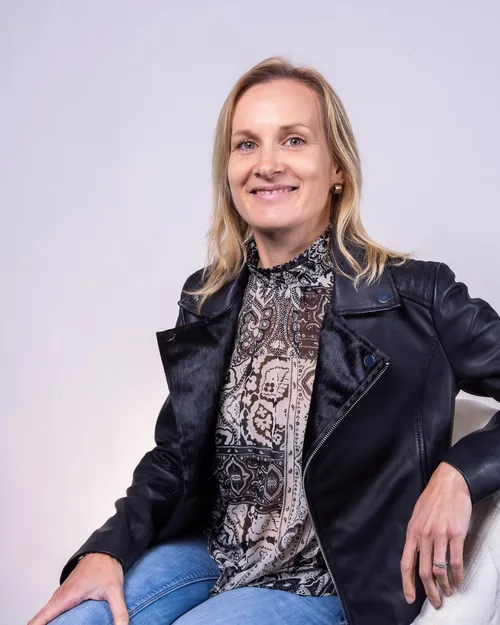
Elodie Gentina runs her own research and consulting firm, EG Consulting, specializing in Generation Z and intergenerational issues.
Elodie Gentina runs her own research and consulting firm, EG Consulting, specializing in Generation Z and intergenerational issues. Elodie Gentina passionately seeks to give meaning to her expertise on the new generation and intergenerational matters, transmitting it for the progress and enrichment of all through conferences with business leaders (L’Oréal, Société Générale, Square Habitat, Crédit Agricole, Veolia, McDonald's, La Poste, Décathlon, CCI, GRDF, Enedis, EDF, Booking.com, AFT, KPMG, Altran, Crédit du Nord, Ramsay Générale de Santé, Clinique Pauchet, Auchan, Intersport, Pôle Emploi, Boston Scientific, Les Mousquetaires, Keolis Jussieu Secours, Align CHU de Grenoble, CHU de Saint Etienne, CHU de Strasbourg, CHR de Metz, Ramsay, National Congress of Pediatrics, The Land, EY, Gan Assurance, Santé et Cité, IESIEL, ANEFA agricultural training and employment, Chamber of Trades and Crafts, Savencia, Alcon, Synadic, Devoteam, Smerra student mutual, CPME Savoie, Patrimonia Prévoyance Suisse, Stoneweg Suisse, Société Générale, Ministry of National Education, DDFIP, Financial Union of France Bank, Clinique Saint Exupéry, Clinique Ambroise Paré, MSA, Social Landlord Housing, International Flavors & Fragrances, CAF, URSSAF, Colas, Vallais/Wallis Promotions, BNP Paribas, Gaznat, EPSM Angers, CHU d’Angers, CHU de Dijon, Institut Curie, Yves Rocher, Group VYV…).
Need a speaker on these topics?
Frequently asked questions
Sur quelles thématiques Elodie Gentina intervient en tant que conférencière ?
Elodie Gentina intervient en tant que conférencière sur les thématiques : generation z, management intergenerationnel, management, travail and entreprise.
How do I book Elodie Gentina for a conference?
To book Elodie Gentina, contact the Lespeakers agency. An advisor will call you back to scope the event, dates and format.
How much does a conference with Elodie Gentina cost?
Elodie Gentina's fees:
- Conference : 6500 €
Booking is handled through Lespeakers.
Which languages does Elodie Gentina speak on stage?
Elodie Gentina speaks as speaker in french and english.
Where is Elodie Gentina based?
Here is where Elodie Gentina is based: Cysoing.

Her conferences
Societal and Managerial Issues of Generation Z
The new generation, referred to as 'Generation Z, alpha, Emos, C for connected, digital natives', has infiltrated the media and is the subject of numerous articles. Some present this new generation in the form of clichés and stereotypes, giving the impression that it is an epiphenomenon or a fad. Everyone tries, as best they can, to label the youth by declaring that they are 'consumerist, narcissistic, rebellious, questioning authority, zappers...'. It is important today to demystify this new generation, to go beyond stereotypes, and to understand the cultural evolution of this new generation by deciphering the specifics of their behaviors.
I propose that my intervention has three major objectives, which are divided into three parts presented below.
While the dividing line between generations Y and Z is blurred in some respects, particularly because the behaviors of Z are often just an amplification of those of Y, real differences exist between these two generations. In the introduction, I will clarify these persistent confusions by shedding light on the societal context that has shaped each of these generations Y and Z.
In the context of my reflection, I will adopt a societal (psycho-social) approach to decipher the deep characteristics that define the new Generation Z. More specifically, the new generation is a generation 'with preconceived ideas'. It is actually much more complex than it seems. What truly characterizes it is that it is a first-time generation, originating a new relationship with digital (1st digital native generation), knowledge (1st omniscient generation), authority (1st hypermodern generation), happiness (1st pearl generation), possession (1st post-material generation), and the health crisis of Covid-19 experienced by these young people (1st activist generation).
What is our relationship with work and the company, according to the generational prism? Drawing a societal portrait of the new Generation Z allows for better acceptance and anticipation of the new challenges that managers will face tomorrow, to make change effective and constructive. While Generation Y has already disrupted work practices and shaken up management, what will happen with Z!! Do we need to reinvent everything? What are the different motivational levers for young people? What place do they give to work? What is their relationship with hierarchy? With intrapreneurship? With learning and training? With permanent contracts?
I have developed a deep understanding of young people (Z and Y) by analyzing them from their multiple facets through various approaches (over 100 long individual interviews with 15-30 year-olds, numerous focus groups, recurring observation phases, over 60,000 questionnaires in France and also internationally, USA, Brazil, through Asia. I will present the results of all these studies conducted by presenting the issues in terms of managing the new generation.
The challenges of intergenerational management
At a time when four generations are living side by side in society and in the workplace, we need to ask ourselves about the importance of intergenerational relations: how can people find their place and thrive in a changing world of work, regardless of their age? How can we break down age-related stereotypes that weigh heavily on both young and older people and create misunderstandings and tensions between generations at work? Ageism is the leading form of discrimination in the workplace in France. One in two seniors has experienced demeaning working relationships in the last five years. According to the study “Seniors and Employment in 2024,” 75% of HR managers admit to favoring younger candidates. The situation is no better for young people: 16% of those under 24 are unemployed.
The first part of the conference paints a picture of the different generations: Beta, Z, Y, Nold, and X, showing that we tend to pigeonhole individuals into generational categories. This raises questions about the very concept of generation. Does it still make sense? Is it more a question of generation or the era in which we live? Today, it is important to demystify each generation (Z, X, and baby boomers), move beyond stereotypes, and decipher the specificities of their behaviors.
The second part of the conference describes the shared expectations between generations in order to question the value of intergenerational management. All managers must move from a segmented and fragmented HR approach (by generation) to an intergenerational HR policy that is inclusive and promotes cohesion between different generations. So what intergenerational tools should be implemented in the company: how can recruitment be approached from an intergenerational perspective? What is the relationship between different generations and commitment? What is the relationship between authority and generation? How can training be used as a means of creating intergenerational bonds? How can a culture of intergenerational communication be developed? ...
Encouraging intergenerational relations is not simply a matter of responding to an HR challenge: it is a strategic lever for performance, innovation, and sustainable commitment. The last part of the conference aims to show that intergenerational relations are a strategic asset, emphasizing three key dimensions: • Performance: age-diverse teams are often more effective because they combine experience with fresh perspectives. • Innovation: the exchange of viewpoints promotes creativity and experimentation. • Sustainable commitment: by valuing all generations, the company strengthens the sense of inclusion and talent retention.
Focusing on intergenerational relations is a response to the crisis in social ties, the loss of reference points, and the individualism reinforced by the digital divide. Intergenerational ties are not a tool, but rather a culture that embodies humanist values based on the key principles of postmodernity, shared by both young people under 30 and seniors: immediacy, interconnection, inventiveness, postmodern tribalism, hedonism, and ethics.