

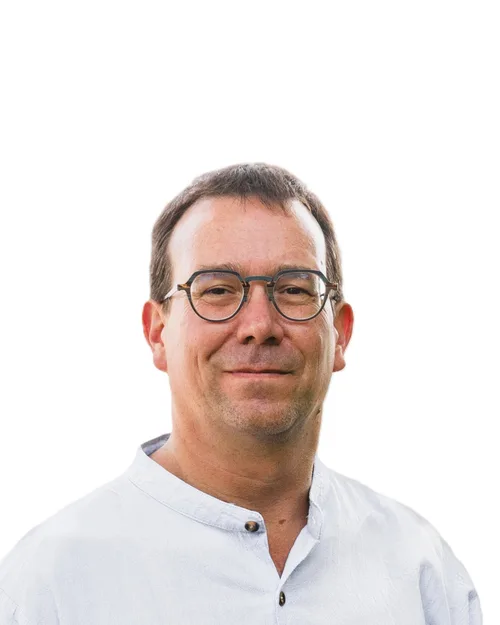
Nicolas Imbert - Speaker on performance
Rethinking the planet, helping to provide concrete answers to climate, environmental, health, economic, and social emergencies.
Nicolas Imbert works to bring the earth together and rethink the planet, to help provide concrete answers to climate, environmental, health, economic, and social emergencies.
An engineer graduated from Centrale Lyon and the University of Southampton, he has 25 years of experience in strategic support for organizations and territories towards resilience, in 3 dimensions: establishing resilience in global health of activities and territories, envisioning and making possible economic models adapted to the challenges, co-constructing these transformations at a human scale through energy, food, and ways of life.
Nicolas has contributed to the creation and administration of think&do tanks (Institute of Circular Economy, Ecological Factory), and to the structuring of territorial projects (Dunkirk, Brittany, Porquerolles, New Caledonia, Reunion Island region…). He has also conducted strategic diagnostics, remediation or transition action plans, and led field actions on food, habitat and space protection, energy, and global health.
He now presides over and directs Repanser, a company dedicated to developing resilience, through 2 levers: understanding and acting, dedicated methodologies, and a global health approach, economically and financially supported. Repanser offers awareness-raising actions and training for leaders, consulting, and support for the implementation of structuring transformation projects for organizations and territories.
His experiences are diverse and complementary: 11 years in strategy and sustainable development in major consulting firms, then 14 years in executive management of an environmental and humanitarian association, to drive and support the ecological transition of territories.
He is the author of 2 works, Advocacy for a (more) sustainable world (2021, David Reinharc editions, out of print) and Rethinking the Planet (2023, Chum editions, 2nd edition completed and updated to be published in November 2026).
Read moreRead less
He also co-wrote the Universal Declaration of Human Rights (published in the National Documentation in 2015, ahead of CoP 21 and the Paris Agreements), and has been contributing to its deployment for 10 years.
Need a speaker on these topics?
Frequently asked questions
Which topics does Nicolas Imbert cover as a speaker?
Nicolas Imbert speaks on the following topics: resilience, transition ecologique, urgence ecologique, environnement, economie circulaire, territoire, sante and biomimetisme.
How do I book Nicolas Imbert for a conference?
To book Nicolas Imbert, contact the Lespeakers agency. An advisor will call you back to scope the event, dates and format.
How much does a conference with Nicolas Imbert cost?
Nicolas Imbert's fees:
- Conference : 3400 €
- Master of ceremonies : 3500 €
Booking is handled through Lespeakers.
Which languages does Nicolas Imbert speak on stage?
Nicolas Imbert speaks as speaker and master of ceremony in french and english.
Can Nicolas Imbert host an event as a master of ceremonies?
Yes, Nicolas Imbert can host your event as a master of ceremonies.
Where is Nicolas Imbert based?
Here is where Nicolas Imbert is based: Marseille, France.
Where does Nicolas Imbert speak?
Nicolas Imbert's speaking locations: Dans le monde entier.
Which speaking formats does Nicolas Imbert offer?
Nicolas Imbert offers the following formats: Conférence, Maître de cérémonie, Animation d'événement, Séminaire, Atelier, Masterclass, Convention.
What did Nicolas Imbert do before becoming a speaker?
Engineer by training, I have over 20 years of experience in the resilience of organizations and territories in the face of ecological emergencies, and in a concrete manner.
More specifically, 11 years in strategy and sustainable development in large consulting firms, followed by 14 years in executive management of an environmental and humanitarian association, to drive and support the ecological transition of territories.
Now, I preside over and lead Repanser, a company dedicated to developing resilience, through 2 levers: understanding and acting, dedicated methodologies, and a holistic health approach, economically and financially supported.
What led Nicolas Imbert to become a speaker?
The importance of transmitting, and showing that we have solutions and feedback to act, each and every one at their level, now.
Why book Nicolas Imbert rather than another speaker?
25 years of experience in very complementary fields.
A financial culture and an international openness that accelerate the transition from vision to action.
How does the audience experience a talk by Nicolas Imbert?
Humor, interaction, solution-seeking, and participation are at the heart of my interventions.
Why do organizers like working with Nicolas Imbert?
Listening, adaptation, efficiency.
What concrete results can the audience expect after a talk by Nicolas Imbert?
Being able to reimagine the planet, each and every one in a complementary manner, and with empathy.
Professional career
- 2025CEO - comprendre et agir en santé globale
REPANSER
- 2011Directeur exécutif - expert en résilience des organisations et des territoires
Green Cross
- 1999Ingénieur diplômé de l'Ecole Centrale de Lyon et de l'Université de Southampton
- 1999Consultant à senior manager en stratégie et développement durable
Ineum Consulting, Kurt Salmon, Accenture Strategy...
His conferences
Expensive oil - how to turn it into an opportunity for businesses, territories, and our activities
Expensive oil, what if it were an opportunity?
Nicolas demonstrates that the rising price of fossil fuels is not only an opportunity to accelerate and make the ecological transition of our economies even more profitable and relevant, but also that we can act, now and without delay, to develop sovereignty and resilience, while preserving the planet and improving overall health.
This is done by relying on the methodology "from vulnerabilities to resilience," published particularly for coastal territories, the maritime and port sector, mountain activities, and activities related to financing, urban development, food, and consumption.
More than 25 feedback experiences can either be presented as support or developed in the context of workshops or case studies where each participant becomes an actor, in a dynamic, interactive, and engaging group work, and confronts the collective production with how the case has been handled in real life.
The conference can be accompanied by case studies, videos, or public presentations.
YouTube video: https://youtube.com/shorts/KI0VDzPIdDk?feature=share
Re-thinking the planet: how to understand and act, preserve the environment, repair and make robust, in global health
Nicolas Imbert, an engineer, leads the French branch of Green Cross, whose role is to illuminate the choices that allow the transition from vulnerabilities to climate resilience, and to propose keys for action and to enhance the ecological transformation of our societies.
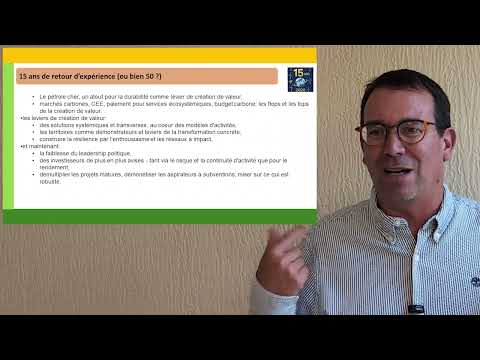
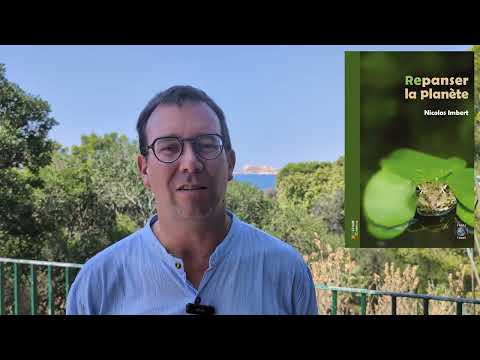
He launched a book for leaders that enables them to UNDERSTAND and CHANGE for a protected planet, a preserved humanity, and resilient businesses, through a transformation in global health. The first edition was sold out in 18 months, and the second, completed and enriched edition will be released in November 2026.
The conference, based on scientific evidence and feedback from the territories, shows what is possible to do. It can be complemented by workshops or case studies, and is entirely based on work done and experienced by the speaker.
Far from political agitation, RE-THINKING the planet allows us to UNDERSTAND and ACT on current ecological emergencies. Everyone will find satisfaction at their own level.
The conference places living together and compassion at the heart of its work, while proposing existing, concrete, and economically relevant solutions.
It shows how expensive oil is an opportunity to accelerate and establish the resilience of our territories, our activities, and our lives, and to regain a peaceful sovereignty.
It reveals our environmental health status, but more importantly, it shows how to improve it, in global health, through water, food, air, soil, and our lifestyles.
It explores how to break free from the obesity of our consumption, to establish a resilient, job-intensive, and regenerative economy.
And by doing this, we contribute to making earth together, which is the title of the collection, on a preserved planet, benefiting from the experience of successful projects.
This conference brings together economic actors, politicians, citizens, and especially fosters enthusiasm and projects, to place science, participation, and living together at the heart of our decisions and our lives.
Impact companies, from purpose to resilient business model: how to do it, and the feedback from pioneering organizations
The health, economic, social, and ecological crisis we are experiencing is also an opportunity for radical transformations or progressive evolutions.
Some speak of a change of civilization, others of a metamorphosis, many remain in indecision. Yet it is about acting, activating one's ecosystem, making an impact by creating shared value.
By leveraging the feedback from the vanguards of ecological resilience and innovation, this conference clarifies how to find one's own levers of action, in an entrepreneurial dynamic, effective and generating triple economic, ecological, and societal performance.
The conference can be supported by working workshops, collective or individual case studies.
Networks of leaders appreciate that it is accompanied by maturity models and by sharing the methodology "from vulnerabilities to resilience" which allows for verifying coherence and completeness, but also complementarities, and how to move from competition to cooperation through a triple-win strategy.
It also looks at the role of labels, how to multiply impact and engage the crew, and the importance of a sustainable, robust, and embraced reinvention.
Global perspectives for local actions: what actions for a real impact? how to act around us?
The health, economic, social, and ecological crisis we are experiencing is also an opportunity for radical transformations or progressive evolutions. Some speak of a change of civilization, others of a metamorphosis, many remain in indecision.
The world is changing, but is our perspective evolving in proportion? With the vanguards of ecological resilience and innovation, we find the right levers for action, close to the ground, in an entrepreneurial dynamic that is effective and generates triple economic, ecological, and societal performance, while being mindful to think, act, and care.
Many examples from the territories have understood how to move forward and reinvent themselves now, in an economically grounded manner, for a better global living, a visible impact, and an inspiring feedback experience. Built around examples and concrete feedback from various territories, this intervention allows us to understand how to accelerate the change we wish to make and render the transition quick and beneficial.
We can widely adjust according to the chosen themes, with local examples from France or from overseas territories, Europe, and other continents, but always experienced by the author, who also presents how to find one's own levers for action, in an entrepreneurial dynamic that is effective and generates triple economic, ecological, and societal performance.
Bioinspiration, beyond biomimicry, the living that inspires us and helps build regenerative models
Let us draw inspiration from the living and nature.
In the face of climate and environmental challenges, let us study the solutions already implemented by nature, and find the right techniques to draw inspiration from them without being intrusive or reductive.
Resilience, adaptation, and robustness are rooted in the living, providing us with valuable lessons for industrial processes, human activities, responses to resource changes, the management rather than the development of territories, and living together.
From very concrete examples, particularly in their economic dimension, Nicolas Imbert shares a way to draw inspiration from the living to transition from vulnerabilities to resilience, supported by a robust methodology and structured case studies.
This conference, supported by workshops, feedback, and examples, multiplies instances from the 5 continents in a very concrete and operational manner, providing both a theoretical and conceptual approach, and a very clear understanding of the relevance of the issues and the results in terms of robustness and impact.
It also shows how to move from a piecemeal and imitative approach to one that understands and acts for resilience, then regeneration, where we work simultaneously on adaptation and robustness, in global health.
Understanding and acting to build global resilience now in response to climate disruption
The health, economic, social, and ecological crisis we are experiencing is also an opportunity for radical transformations or progressive evolutions. Some speak of a change of civilization, others of a metamorphosis, while many remain in indecision.
The world is changing, but is our perspective evolving in proportion? It is now up to the vanguards of ecological resilience and innovation to find their own levers for action, in an entrepreneurial dynamic that is effective and generates triple economic, ecological, and societal performance.
This conference, in French or English, provides precise answers and feedback on concrete questions.
All the topics addressed are supported by feedback adjusted to the audience and consolidated in the methodology "from vulnerabilities to resilience".
We can also emphasize one or more of the following angles:
- resilience in an uncertain context: where to address emergencies and where to build and create a sustainable system,
- environmental health why it is essential in building resilience, and how to act. With levers for health actors, insurers, financiers, farmers, food and cosmetic brands, water and waste companies,
- saving water – where, when, and how to start and act to preserve humans, living beings, and ecosystems, secure and then regenerate?
- healthy local and seasonal food, enabling the resilience of territories, the pleasure of being in place, eating well, and better health, from upstream to downstream,
- the coastline and rising waters – what it implies, how to address emergencies and build resilience?
- what are the effective economic models to repair the planet and change the world?
- living together on a finite planet – from misunderstanding to complementarities