

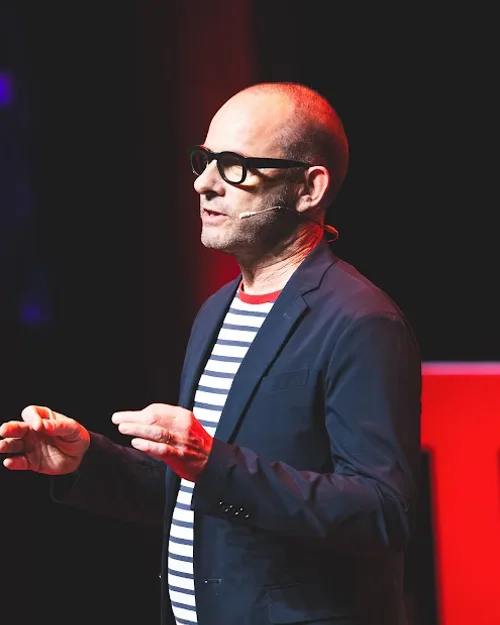
Sébastien Garcin - Speaker on egalite homme femme
Entrepreneur, former CMO of L'Oréal, TedX speaker
Sébastien Garcin is a speaker and specialist in engaging men for equality between women and men and preventing sexist and sexual violence. For several years, he has been supporting companies, institutions, and associations in implementing concrete actions to mobilize men as allies of change.
With extensive field experience with leaders, employees, and HR teams, he works to illuminate power dynamics, remove barriers to male involvement, and propose pragmatic action levers to transform professional cultures. His conferences blend pedagogy, awareness, and operational tools, with a constant concern to create a safe, inclusive, and constructive space.
He is regularly invited to lead webinars, keynotes, and workshops aimed at preventing sexist behavior, fostering a respectful work environment, and encouraging shared responsibility in the face of violence. His accessible and committed approach opens dialogue, deconstructs stereotypes, and engages diverse audiences around an ambitious vision: to make men full actors in progress towards equality.
Need a speaker on these topics?
Frequently asked questions
Which topics does Sébastien Garcin cover as a speaker?
Sébastien Garcin speaks on the following topics: egalite homme femme, egalite en entreprise and leadership.
How do I book Sébastien Garcin for a conference?
To book Sébastien Garcin, contact the Lespeakers agency. An advisor will call you back to scope the event, dates and format.
How much does a conference with Sébastien Garcin cost?
Sébastien Garcin's fees:
- Conference : 2500 €
Booking is handled through Lespeakers.
Which languages does Sébastien Garcin speak on stage?
Sébastien Garcin speaks as speaker in french and english.
Where is Sébastien Garcin based?
Here is where Sébastien Garcin is based: Paris, France.
Where does Sébastien Garcin speak?
Sébastien Garcin's speaking locations: Dans le monde entier.
Which speaking formats does Sébastien Garcin offer?
Sébastien Garcin offers the following formats: Conférence, seminaire, atelier, webinaire.

His conferences
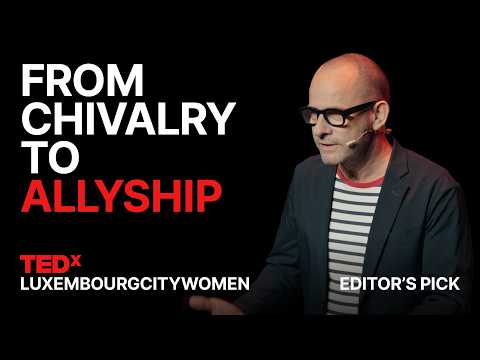
What if we reinvented gallantry?
In this TedX talk, I explore what it means to "be a man" in the post-MeToo era, deconstructing the traditional gallantry that has been passed down to us as a sign of nobility… while it often functions as sexism disguised as politeness. Drawing from my own journey — between illusions of "good manners" and late awareness — I propose a new way to inhabit masculinity: a modern gallantry based on responsibility, attention, and reducing fear.
I show how men can become reliable allies, not through heroic or ostentatious gestures, but through simple, discreet, and consistent behaviors: adapting their presence in public spaces, listening without dominating, clarifying intentions, genuinely sharing responsibilities, and understanding how our gestures, our gazes, or our silence influence others' feelings of safety.
🎯 Key Ideas
Yesterday's gallantry glorified feminine fragility — and reinforced masculine superiority.
Today, the issue is no longer to "protect" women, but to not be a potential danger.
Fear is not individual: it arises from millions of feminine experiences, and men must take this into account.
Chivalrous allyship relies on daily practices, without expectation of recognition or reward.
Cultural change will not happen for men — but by them.
🎤 Why this talk is essential Because it allows men to enter the debate on equality without guilt, but with maturity and responsibility. Because it offers concrete tools to immediately transform one's way of being in the world. And because it finally proposes a modern, credible, and peaceful vision of masculinity — free from domination, enriched by awareness and connection.
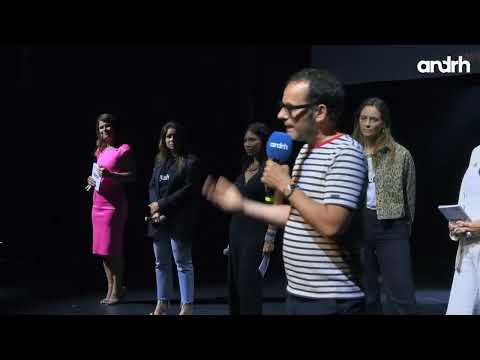
Men: Choosing to Ally
In my talks, I reveal a often invisible fact: even in modern companies and tech start-ups, men still hold the majority of power, while women stagnate, drop out, or leave the sector — especially after their first child. It is no longer a question of law or skills, but of culture, habits, and deeply ingrained biases.
I show how to concretely transform this reality:
by making internal policies truly equitable, by recruiting inclusively, by creating safe and balanced work environments, and by training men to become true allies of change.
Why is this urgent? Because equality is not just fair: it is a lever for performance, innovation, and talent retention. And because men themselves benefit from breaking free from toxic masculine models.
This talk provides simple, actionable keys, and a powerful framework to sustainably engage men in professional equality.
Men are part of the problem ... and the solution
For a long time, I believed I was 'a good guy.' And then, ten years ago, I discovered feminism... in the worst way: by awkwardly arriving in a group of angry activists. At first, I wanted to prove that I was 'not like the others.' Then I learned to be quiet. To listen. And what I heard transformed my view of the world.
I discovered the extent of the violence: millions of women victims, and thus millions of men perpetrators. Not monsters. Ordinary men. Men like us. And I understood that, without being violent, we all maintain — through our silences, our jokes, our reflexes — a system that allows the worst.
So, what to do? Take responsibility, use our power, and become allies: listen, support, act, talk to other men, change our practices and our organizations.
An ally is a man who puts his strength, his network, and his influence at the service of equality. A man who stops being part of the problem and finally chooses to be part of the solution.