
Yves Agid
Yves Agid makes a bold bet: Better understanding your brain means better understanding yourself. Through an interdisciplinary approach combining neuroscience, philosophy, and sociology, the author explores the foundations of what makes us human and the implications for our personal development.
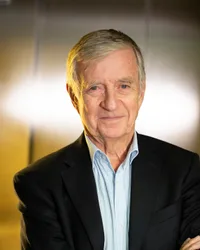
Yves Agid: Pioneer of neuroscience, founder of the Brain Institute in Paris Yves Agid, a world-renowned neurologist and neuroscientist, has transformed the understanding of neurodegenerative diseases, particularly using Parkinson's and Alzheimer's diseases as models. As a physician-researcher, he spent most of his career at the Salpêtrière Hospital, where he was head of a neurology department and director of an INSERM laboratory ('Causes and Consequences of Neurodegenerative Diseases'). A visionary, he is one of the co-founders of the Brain Institute (ICM) in Paris. Established in 2010, the ICM is an international research center that brings together 900 investigators, scientists, clinicians, and entrepreneurs, aiming to better understand and treat diseases of the nervous system. Author of over 600 scientific publications in prestigious journals (Science, Nature, The Lancet, New England Journal of Medicine...), Yves Agid is also a prolific writer who explores the links between brain, mind, and society. His latest book, The Cerebral Man (Albin Michel), has just been published and offers a captivating reflection on the central role of the brain in the human condition, accessible to both experts and the general public. As a trainer and mentor, Yves Agid has inspired several generations of neurologists and researchers, contributing to the international prominence of French neurology and neuroscience. As a charismatic speaker, he passionately shares his expertise and vision of modern neuroscience while raising public awareness of the importance of research to address the medical and societal challenges of tomorrow.
Prices
- Conference : 7000 €
Localization
Languages
My conferences
Captivating Reflection on the Central Role of the Brain
I would like to tell you the story of... Ah, I can't remember his name... It will come back to me tonight. YVES AGID, founder of the Brain and Spine Institute (ICM), might be experiencing a sudden memory lapse? No worries! We all suffer from these memory lapses, we all complain about them, but they are by no means a sign of cerebral degeneration. Why do we forget? Because we are tired, stressed, overworked, or because we are aging. "You have just under 100 billion neurons and contrary to popular belief, you do not lose neurons." That reassures us. However, while we do not lose neurons, we do lose nerve endings. "Connections are less effective, communication is poor, memory fades." However, in Alzheimer's, we lose not only nerve endings but also neurons: "In aging, it is the tree that loses its leaves; in Alzheimer's, it is the tree that disappears, it is a deforestation of the brain." What hopes are there to overcome this disease? While research is active, the results are disappointing: "The brain" is complicated. It is like the universe. You have 100 billion stars in a galaxy. And you have 100 billion neurons, each neuron has tens of thousands of connections. Every second, a billion electrical signals are emitted in the brain.