
Laurent Pellet
Take control of your time for a sustainable balance between performance and serenity.

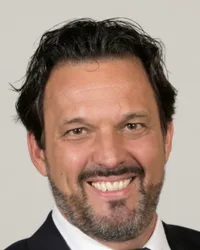
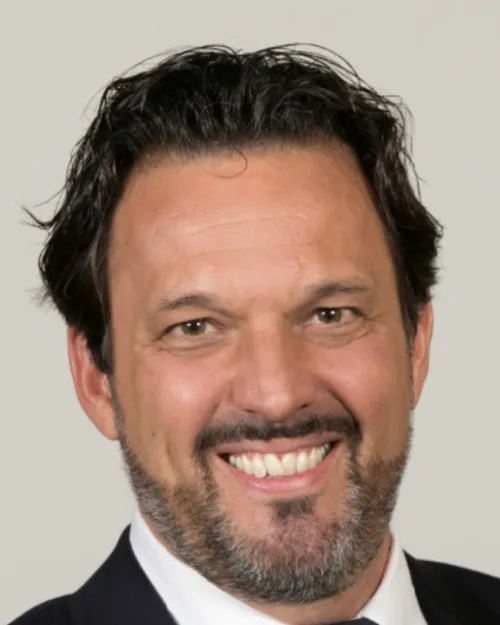
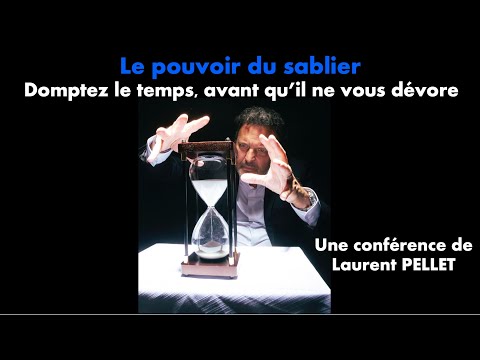
Companies and their leaders are facing increasing pressure: ambitious goals, heightened mental load, days fragmented by emergencies and constant demands... In this context, time has become a critical factor for performance and balance. Yet, we often feel like we are subjected to it rather than mastering it. After 28 years of career at Accor and Edenred, including 22 years of expatriation across several continents (Europe, South America, Asia), Laurent Pellet has held positions as country and then regional general manager, eventually becoming a member of the Executive Committee of the Edenred group (CAC 40) for 10 years. Having attended Harvard Business School, he has led multicultural teams and driven strategies in high-intensity environments, where time organization and priority management were crucial issues. Faced with the challenges related to time usage in demanding contexts, he had to experiment and refine methods to regain control over his schedule and priorities. He now shares this expertise through a remarkable and interactive conference: ⏳ “Your Time, the Key to Your Balance”⚖️ This conference goes beyond simple organizational techniques. It offers a deep reflection on our relationship with time, enabling leaders and professionals to make choices more aligned with their goals and well-being. A PASSION FOR TRANSMISSION In his new activities as an independent consultant, Laurent shares his knowledge and experience through training and coaching, allowing leaders and professionals to enhance their managerial practice. He supports leaders who wish to progress in managing their teams while developing their own effectiveness and ability to make decisions aligned with their well-being. For him, sustainable effectiveness relies on a balance between performance and serenity, ensuring the longevity of success. He is also a podcaster. Through “Faites Entrer l’Expert”, he engages with expert speakers in various fields, selecting themes he deems essential for managers. His goal: to provide leaders with concrete and pragmatic tools to improve their managerial skills and daily performance.
Prices
- Conference : 4500 €
Localization
Languages
My conferences
Your Time, the Key to Your Balance
⏳ TIME, A MAJOR ISSUE FOR COMPANIES In a high-pressure professional world, teams and leaders face increasing pressure. Ambitious goals, multiple urgencies, constant demands… Time has become a critical factor for performance and well-being. ⚠️ What this implies for companies: ✔ compromised efficiency: fragmented days, distraction, poorly defined priorities ✔ gradual disengagement: mental overload, loss of motivation ✔ risk of burnout: difficulty in maintaining a sustainable pace in the long term 🕒 A CONFERENCE TO CHANGE YOUR PERSPECTIVE ON TIME “Your Time, the Key to Your Balance” does not simply offer organizational tools, but a transformation of the relationship with time. It is an experience that challenges preconceived ideas and provides concrete keys to better decide, prioritize, and live. 🛠️ A PRAGMATIC AND INSPIRING APPROACH This interactive conference relies on: ✔ impactful life experiences to illustrate the invisible mechanisms that govern our relationship with time ✔ essential perspective-taking to understand why we always feel like we are running out of time ✔ simple yet powerful tools and methods, tested and proven in demanding professional contexts ✔ a dynamic and immersive format that engages the audience and invites them to see time from a new angle 💡 WHAT YOU WILL DISCOVER 📍 reflect on what time really is and understand why it cannot be “managed” 📍 how to align your schedule and daily tasks with your priorities while giving meaning to your life 📍 what to do when you feel overwhelmed: methods and strategies to quickly and effectively reorganize 📍 concrete tools to manage daily tasks, organize your agenda, handle emails, anticipate unforeseen events, and structure your time without losing flexibility 🎭 AN EXPERIENCE TO LIVE “Your Time, the Key to Your Balance” is not a theoretical conference. It combines impactful testimonies, interactions with the audience, and immersive experiences to leave a lasting impression. The audience leaves with immediate awareness and solutions that can be applied the very next day. The goal: to gain serenity and lasting efficiency. 📌 FORMAT 🕒 75 minutes 👥 audience: managers, leaders, entrepreneurs, pressured employees 📊 interactivity: online voting and exchanges with the audience
Learn more
Who am I?
What I did before becoming a speaker
I spent 28 years in the international company, first at Accor, then at Edenred. After starting in finance, I moved into General Management positions: first for countries, then for large geographical areas (Southern Europe, Africa, the Middle East, Asia). For 10 years, I sat on the Executive Committee of Edenred, a company listed on the CAC 40. I spent 22 of those 28 years in expatriation, across several continents. I also completed an Executive Program at Harvard. It is this intense, multicultural, high-pressure trajectory that has shaped my vision of time and priorities.
What made me become a speaker
My return to France in 2020, after 22 years of expatriation, was a turning point. This change of pace allowed me to take a step back from everything I had experienced. I realized that I had developed, out of necessity rather than through reading, a particular way of seeing and using time, a method that had allowed me to endure and perform in extremely demanding environments. And that others could benefit from it. In 2023, I decided to dedicate this new phase of my life to passing it on.
A failure or turning point that shaped me
22 years of expatriation represent a form of personal time debt, time massively invested in a career, to the detriment of other dimensions of life. This is not a failure in the classical sense, but a deep awareness: one can optimize their professional agenda to the extreme and neglect to manage their overall life time. The real turning point? Understanding that time is not managed, it is used, deliberately, in what really matters.
What excites me about working as a speaker
That precise moment when something shifts in the room. When I see a manager raise their hand during an interactive exercise, then lower it, and realize that they have been running for years after a life that may not be theirs. This awareness, live, in front of several hundred people, is why I take the stage.
The mission I'm carrying today
Helping managers and leaders regain control of their time, not to do more, but to align their daily choices with what truly matters to them. Moving from constant reaction to intentional action.
The belief or message I want to leave for the long term
That you have an extraordinarily rare and precious life. Scientists have calculated that the probability of being born, you, as you are, is 1 in 400 trillion. And that this life, you are living it now, through the decisions you make hour by hour. It is not a question of organization. It is a question of clarity about what you do with this time.
A personal story I often tell
There is a story I often tell offstage, because it is the origin of everything. Lying on a hospital bed, with time for the first time in a long while, I took stock. I was very good at managing my professional time, everyone recognized that. But while living this intense, international, family, professional life, I had set aside some important things. These things were on a list I had in my head for years. And every time I thought about them, I told myself: I don't have time. It was by repeating this phrase that I had an epiphany. I don't have time, that's false. We all have 24 hours. If these things are not done, it's because we don't choose to make room for them. Time management is fundamentally about knowing what we really want and opening windows to do it. Everything else, optimization, tools, methods, is just secondary. The risk of spending your life optimizing the professional is ending up at the end with a long list of important but non-urgent things that have never been done, because there are windows of opportunity that close.
Where I'm from and what shaped my childhood
I was born to a Hungarian mother and a Marseille father. My mother left Hungary in 1956, during the revolution that forced thousands of people to flee. It was in France that she rebuilt her life. I grew up in Nice, and very early on, what attracted me was the outdoors: scuba diving, paragliding, scouting, adventures in nature. As a teenager, I bought myself a motorcycle to travel across Europe. I was always on the move, exploring. And quite naturally, this energy was coupled with a passion for teaching: I was a scout leader, then a diving instructor. Teaching others to go where they had never been is something that has always inspired me.
The childhood dream that still follows me
To be an airplane pilot. I have always been attracted to professions where one rises above, where one finds oneself in a parallel time, disconnected from the world below. In an airplane, we float above everything; it is a form of existence outside of ordinary time. I now live this dream differently, through paragliding and scuba diving: these states of disconnection where one finds oneself suspended between two worlds. It is this taste for exploration, freedom, and overcoming challenges that has also driven me towards an international career across four continents.
My memory of speaking in public for the first time
It was at the school fair, in CM1. My older brothers challenged me: to go up on stage and give a speech in front of everyone. I didn't know what to say, so I recited my multiplication tables. The audience burst out laughing. Eventually, someone kindly asked me to come down, but I had held my ground. And in that moment, I felt for the first time what it was like to speak in front of an audience and to provoke something. That feeling has never left me.
The people who most shaped who I am
It is my brother Marc, ten years my senior, who has shaped me the most. He was my godfather and also my scout leader. We spent a lot of time together because of that. He taught me things that school does not teach: the sense of responsibility, the taste for adventure, the value of connections. I had great admiration for him, the kind you have for an older brother who takes you under his wing. Marc passed away in 2014. He remains a silent reference for me, someone whose teachings I carry without always realizing it.
The choice that most changed my trajectory
Two key moments: accepting my first expatriate position, which opened my eyes to a worldview I would never have had otherwise. And deciding to return to France in 2020, after 22 years, to do something different with what I had accumulated. The first choice built me. The second set me free.
The values that guide my life off stage
The consistency between what we say and what we do. Transmission, not as a duty, but as a pleasure. And curiosity: for people, ideas, and different ways of seeing the world.
What a normal day looks like for me
A day structured around deliberately chosen time blocks, content production, podcasting, coaching, sports, and reflection time. I practice what I preach: I have a typical week architecture, and I protect certain slots as if they were client appointments.
How I recharge between engagements
Through physical movement, nature, I live in the Basque Country, it's not a coincidence. And through deep conversations, with the experts I invite to my podcast or the managers I support. I recharge as much in exchange as in silence.
The passions and interests that are part of my life
I walk an average of six kilometers a day. I live in the Basque Country, between the ocean and the forest, and I take this very seriously. Moving in nature is my way of recharging and thinking. I also travel a lot, often for conferences, and I take the opportunity to see my three daughters who have left the nest and are living their own lives, my family in Hungary, my family in the South. Family life is truly at the heart of who I am.
What surprises people who only know me on stage
I think what surprises people is how different I am off stage. In conferences, I am structured, precise, focused on impact. In real life, I laugh a lot, I am very approachable, I like to put people at ease, and I love humor. I am very rigorous about work and very light about everything else. People who meet me outside of a conference are sometimes surprised to see that I am not at all in a solemn register.
What I'm reading, watching, or learning right now
I don't have a book I'm currently reading because I'm writing one: "Conversation with Time." It's an autobiographical and conceptual project that brings together my entire story, all my experience, and all my frameworks around the resource of time. In parallel, I am completely immersed in artificial intelligence. I have become passionate about developing mini-applications that are useful, like the interactive animations for my conference. I deliberately launched my second professional life without employees to maintain total freedom. But thanks to AI, I am rediscovering the potential of teamwork by working with very sharp agents. What is opening up before me deeply excites me.
The advice that most impacted my life
It's not really advice; it's a phrase from my maternal grandfather that I sometimes use in conferences and in my book. He was a pilot. After World War II, the communists imprisoned him, confiscated his belongings, his freedom, and tortured him. He held on by clinging to his memories. And he said that one must spend their life collecting memories because it's the only thing that no one can ever take from you, and that you will carry with you. This phrase resonates with everything I convey about time: what we accumulate that is precious is not hours worked, but moments lived.
What I'd tell myself ten years ago
Don't be afraid. 90% of my fears turned out to be unfounded. I wish someone I trusted had told me that earlier: go for it, there is so much to do and to experience. I think I would have gone even faster and done even more things.
A fear or limit I'm still working on
The fear of missing out. It is an ancient, deep fear. The car's gas tank must be full, the phone's battery too. My family gently mocks me for this. Deep down, it's a need for autonomy: to feel that I am free, that I do not depend on anything or anyone to move forward. Anything that can hinder this feeling of freedom creates a form of anxiety in me. It is something I am working on, knowing where it comes from.
What I'm most proud of, beyond my résumé
Building the family that I have. Three beautiful, intelligent daughters who are pursuing great studies and leading their own lives. And after more than thirty years of marriage, a relationship with my wife that remains deep and alive, despite a life in all the countries of the world and everything we have gone through together. For me, succeeding in professional life without succeeding in personal life is not really succeeding. My true pride is having succeeded in both.
Positioning & expertise
What concrete problem I can help your audience solve
The chronic feeling of lacking time, and the silent disorganization that results from it: reactive days, blurred priorities, a growing gap between what we do and what really matters. I help managers and leaders to get out of this, not through scheduling tricks, but through a fundamental shift in their relationship with time.
Why book me rather than another speaker?
Because my legitimacy is not theoretical. I have led teams on 4 continents, with extreme time zones, cultures, and levels of pressure, and I had to find, out of necessity, ways to endure and perform over time. What I convey, I have lived for 28 years before talking about it.
My specialty in one sentence
Transforming the relationship to time for managers and leaders, so that they move from constant reaction to intentional action.
Topics I don't cover
Productivity hacks and organizational tip lists. This is not what sustainably changes behaviors. Time is not a technical problem; it is a matter of life.
My unique angle
Time is not managed; it is used. This nuance changes everything. I do not teach people to do more in less time; I help them ask the right question: am I putting my time where it really matters to me?
The field experience behind my message
28 years of career in international business, including 22 years in expatriation. Country CEO, then multi-country zone CEO. 10 years on the Executive Committee of Edenred (CAC 40). Harvard Business School Executive Program. I have experienced, on a large scale and high intensity, the time constraints that my audiences face.
My speaking style in one or two sentences
Anchored in experience, never in theory. I blend personal storytelling, interactive mechanics, and concrete tools to create an experience that shakes things up and stays with you.
Which audiences get the most from my sessions
Managers and leaders under pressure, who feel like they are running but no longer really know towards what. And more broadly, any professional who has real autonomy over their schedule and feels that it drives their life rather than the other way around.
Which types of organizations I'm the best fit for
Companies and groups with teams under high performance pressure: large corporations, growing mid-sized companies, high-intensity environments (finance, consulting, tech, retail, industry). My message particularly resonates with executive committees and intermediate management populations.
Concrete outcomes your audience can expect after I speak
An immediate awareness of their relationship with time. Tools applicable from the next day to regain control. And for some, a deeper questioning of the alignment between their life and their real priorities, the most lasting effect.
The method, framework, or philosophy I stand for
Yes, the TIME method, structured around 4 dimensions. And the LIVE framework (Like, Impact, Value, Earnings) to assess the alignment between what we do and what truly resonates with us. These frameworks are simple, but they change perspectives sustainably.
Results & credibility
Career highlights I want to emphasize
Member of the Executive Committee of Edenred (CAC 40) for 10 years. Management of areas covering Southern Europe, Africa, the Middle East, and Asia. 22 years of expatriation. Executive Program at Harvard Business School. These elements are not there to impress; they provide context: I have experienced the time challenges faced by my audiences.
Clients and sectors that have trusted me
Among the organizations that have trusted me: Technip Energies, LVMH, Pernod Ricard, Air Liquide, Sciences Po, HomeServe, Berger Levrault, Ekimetrics, APM (Association for Management Progress). Represented sectors: energy, luxury, industry, services, higher education, tech, and software publishing. These interventions cover internal conventions, management seminars, as well as HR and training events.
What organizers and audiences tell me most often
The most frequent feedback focuses on three dimensions. First, the emotional impact: "An inspiring, dynamic, and humorous conference. Time flies by" (Karen Mauger, HR Director Sciences Po). Next, credibility: "Laurent's international experience, forged at a high level in intense contexts, gives his interventions great credibility" (Patrick Burguet, VP HR Air Liquide). And immediate usefulness: "Laurent took us on a strong and inspiring journey, with concrete keys that are immediately applicable" (Jennifer Dixon, HR Director Pernod Ricard). A phrase often summarizes it all: "Simple and strong" (Laurent Felix, CEO Ekimetrics).
Where I shine most — and when I point you to another option
I perform particularly well in keynote speeches at conventions or corporate seminars, addressing audiences of 50 to 1,000 people. My format is designed for interaction even in large groups. For deep transformation workshops over several days or very technical formats, I would recommend more specialized profiles.
What I spotlight beyond my profile (book, certifications, proof, etc.)
The podcast "Faites Entrer l'Expert", which reflects my commitment to sharing knowledge beyond the stage, and a constant intellectual curiosity about the topics that matter to managers.
Speaking style
My energy on stage
Intense yet composed. I am not about entertainment or agitation; my energy is that of someone who has something important to say and takes the time to say it well. The audience feels the conviction.
How audiences experience my sessions (participation, humor, pace)
He is engaged from the very first minutes by a mechanism that takes him by surprise. He laughs at times; the participatory moments create funny and human instances. He reflects. He recognizes himself. He leaves with insights he didn't have when he entered.
Visuals and personal stories: what to expect from me
Yes to both. The content is very visual, with polished slides, animations, and a controlled rhythm. And personal stories are at the heart of the process: it is by recounting what I have experienced, both professionally and intimately, that concepts become embodied and memorable.
Inspirational keynote vs hands-on workshop; improvisation vs tight structure — how I work
Keynote, with a precise structure and a constructed dramaturgy. I leave nothing to chance in the architecture of the speech. But within this structure, I leave room for the audience: the reactions of the public feed the conference in real time.
How I customize content and how much I tailor to you
The content works as is, regardless of the sector or size of the company, from a small business to a large group. The mechanics, tools, and awareness are universal. If an organization wishes to discuss specific adjustments, I am open to exchange, but this is not the default mode of operation.
What makes my sessions memorable
Because I do not provide information, I create experiences. Participatory mechanics, shifts in perspective, and moments when the audience surprises themselves create markers that last long after.
The strongest moments and insights I create for audiences
The opening sequence, a false start that destabilizes and immediately engages. And the moment when everyone realizes, thanks to the TIME method, the gap between what they say they prioritize and what they actually spend their time on. This moment often creates a silence in the room.
The emotion or mindset I want people to leave with
A quiet clarity. Not the agitation of "I have to change everything now", but the serene conviction that one can take back control, and that one knows how to start.
Concrete content
The main takeaways participants leave with
That time is not managed, it is used. That the real question is not "how to do more" but "am I doing what matters". And that simple tools allow one to take back control immediately. At the end of the conference, I provide a link to replay online all the activities experienced in the room, to anchor the awareness over time.
What your audience can apply the very next day
The 4 dimensions of the TIME method, the architecture of a typical week, the revisited distinction between urgency/importance. And thanks to the link provided at the end of the conference, they can find and replay all the interactive activities to consolidate what they experienced.
Tools, methods, and exercises I provide
The TIME method (4 dimensions of time). Live awareness exercises (votes, raised hands, mirror questions). A link provided at the end of the conference allowing participants to replay online all the activities experienced in the room (sablier-animations.vercel.app). And to go further: the AI Round Table and individual Chrono Coaching, to transform awareness into sustainable change.
Myths and common mistakes I debunk
That time can be managed. That working more solves the problem. That the busiest people are the most effective. And that organization is a matter of the right app or tool.
Real-world examples that best illustrate my message
Situations experienced during my 22 years of expatriation: strategic decisions under pressure, managing teams across multiple time zones, prioritization decisions on a global scale. But also intimate personal experiences, such as the birth of my daughter, which anchor the discussion in what time really means on the scale of a life, not just a career.
Sensitive topics I address frankly, if any
The gap between what we say we prioritize and what we actually spend our time on. The question of meaning. And I also gently address the issue of finitude: talking about time without discussing the end of the time we have is to evade the essential. I touch on it lightly, without drama, to remind that this resource is not infinite. Some find it uncomfortable. I do it anyway, because it is necessary.
Beliefs or ideas in the audience I aim to shift
That the lack of time is a fatality. It is not a fatality; it is most often the result of insufficient management of one's own priorities.
The “aha moment” I aim for your audience
The moment when someone realizes that the problem is not the amount of time, but the clarity about what they want to do with it. This shift changes everything.
Format
On-site, remote, or hybrid: what I accept and prefer
I only intervene in person. My conference relies on visual animations, a room dynamic, and physical interaction with the audience, elements that are inseparable from the experience. The conference lasts between 15 minutes and 1 hour depending on the constraints of the event. For small teams, I also offer a masterclass format: I deliver the conference while allowing participants to ask questions at any time, which creates a lively dialogue and can directly lead to the construction of a concrete action plan.
Limits & transparency
How I handle a difficult or low-energy audience
In practice, the question rarely arises: the format engages the audience from the first minutes in playful interactions, even before they have decided to engage. There is no open debate on stage, so there is little room for contestation. Tensions may arise during the final Q&A phase. In this case, I respond assertively, drawing on my personal experience, without claiming to hold the truth. My position: if you liked it, great. If not, still give it a try, and if it works, you will have gained something.
If tech fails: how I respond
It would be very problematic. My presentation is deeply visual and relies on animations essential for understanding. That's precisely why I rigorously check every technical aspect in advance. It has never happened to me, and I do everything to ensure it stays that way.
How I handle tough questions and running over time
Difficult questions are welcome; they signal engagement. I respond candidly, including when the answer is "I don't know" or "it's more complex than that." Regarding timing: I have a precise structure that I adhere to. If the client wants additional Q&A, we plan for it from the briefing.
What can derail a session, in my view — and how I prevent it
Poor targeting of the audience. My presentation is aimed at people who have real autonomy over their schedule. If the audience consists of employees who receive instructions and have no leeway in organizing their time, they will leave frustrated, not because the content is lacking, but because they won't have the tools to apply it. That's why the prior briefing is essential.
Logistics & organization
What technical setup I need on site
Lavalier microphone or handheld microphone (preferably wireless), projector or LED screen, online voting system if digital interactivity is desired (show of hands as an alternative), and a control room capable of displaying my slides from my computer or a USB stick.
My tech rider or logistics document
Wired HDMI connection between my Apple MacBook and the projection system (projector or LED screen). Sound output. Lapel microphone if large audience. And a critical point: a stable and dedicated WiFi connection is essential, as the interactive animations of the conference depend entirely on it. The responsibility for technical quality, particularly the internet connection, lies with the organizer. A complete technical test (projection, sound, WiFi) should be scheduled at least 45 minutes before the start of the presentation.
How early I usually arrive before the event
At least 45 minutes to 1 hour beforehand, to check the technology, feel the room, and if possible, exchange a few words with the organizers about the audience's mood that day.
Whether I travel internationally and if I need an interpreter
Yes to international travel. I speak in French, English, and Spanish, without an interpreter for these three languages.
My slides, filming, and reusing recordings
I provide my slides in PDF format including animations, delivered at the end of the conference. Any video or audio recording is prohibited.
My availability before/after, networking, meet & greet
Yes, and I attach importance to it. Informal exchanges before an intervention allow me to calibrate better. Afterwards, it is often where the richest conversations take place, and where collaborations are born.
Working together
Why organizers like working with me
Because I have the reflexes of a former large company leader: reactive, attentive, reliable. Organizers appreciate putting me in front of their teams because I have the legitimacy and seniority to be credible, and to lend weight to a message that aligns with what companies need: to increase team performance without exhausting them. Having led this intense lifestyle around the world and across time zones, I do not give advice on time from a book; I give it because I have lived it. And the audience feels that. With the AI Round Table, organizers leave with a strategic deliverable on the same day. With Chrono Coaching, their teams can continue to progress individually over time. This is not a conference. It is an investment with measurable returns.