

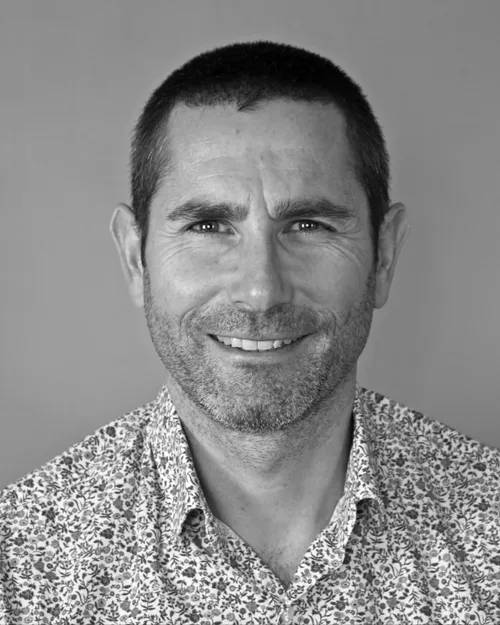
Minec Willy - Speaker on stress
Adventures, psychology, and hostile environments
Sports educator, physical trainer, and community service manager for nearly 20 years, I have simultaneously pursued my activity as an adventurer. For the past 16 years, I have been a consultant/speaker on the world of adventure.
I have undertaken multiple long-distance journeys and ascents in various forms (long-distance swimming, mountaineering, crossings), and have had numerous immersion experiences in hostile environments (deserts, high mountains, bushlands, primary forests...). These multiple adventures allow me to continue working on my main area of study: stress adaptation in hostile environments.
• Specialist in stress adaptation in hostile environments • Speaker on the world of adventure (public and corporate conferences, scientific symposiums, round tables, adventure festivals...) • Writer of articles for outdoor specialized press • Survival instructor (for Nature et Découvertes, companies, and individuals) • Technical advisor on outdoor shoots (Eurosport, BFM TV) • Director of the documentary "Azimut Brutal" (currently in post-production) • Co-director of the documentary "The Roofs of Europe"
Need a speaker on these topics?
Frequently asked questions
Which topics does Minec Willy cover as a speaker?
Minec Willy speaks on the following topics: stress, decision, extreme, confiance en soi and depassement de soi.
How do I book Minec Willy for a conference?
To book Minec Willy, contact the Lespeakers agency. An advisor will call you back to scope the event, dates and format.
How much does a conference with Minec Willy cost?
Minec Willy's fees are provided on request through Lespeakers.
Which languages does Minec Willy speak on stage?
Minec Willy speaks as speaker in french.
Where is Minec Willy based?
Here is where Minec Willy is based: Montpellier, France.
His conferences
Managing Stress, Risks, and Decision-Making
Anchored in the collective unconscious as a dangerous universe, the world of adventure is overflowing with risk factors that generate stress. Isolation in these environments deemed hostile leads to a lack of human contact and medical assistance, pushing the explorer into anxiety-inducing situations.
But how could these major aversive impacts be harmful to the adventurer? For the jeopardy of their physical and moral integrity, of course, but also, to a lesser degree, for the risk of abandoning the expedition.
A complete halt of the journey, a thwarted or incomplete project, is a risk far more common than that of a fatal fall and yet it matters so much to the adventurer; to the point of sometimes having to leave their life behind, refusing to abandon. Some expeditions only make sense through the means used or the path taken. Changing that means radically altering the essence of the adventure.
The question then is: "How could it be possible to manage stress without jeopardizing the project's outcome?"; or how to keep moving forward despite the irresistible urge to give up?