

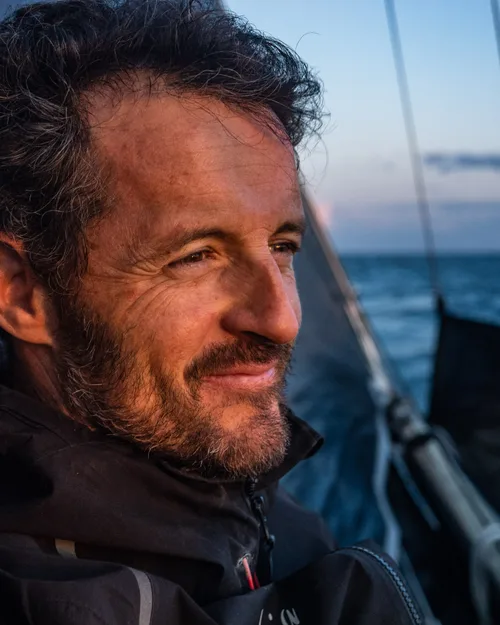
Christopher Pratt - Speaker on leadership
Navigator, entrepreneur & researcher in psychosociology, Christopher translates his 25 years of offshore racing experience into leadership in uncertain environments.
Navigator, entrepreneur, and researcher in sports psychosociology, Christopher Pratt has been sailing at the highest level for nearly 25 years. A Franco-British based in Marseille, he has raced solo, double-handed, and with a crew in the biggest races (Route du Rhum, Solitaire du Figaro, The Ocean Race) and on all types of offshore racing boats (Figaro, IMOCA 60, Ocean Fifty, Ultim multihulls). European champion and world vice-champion in dinghy sailing at just 18 years old, double winner of the Tour de France à la voile, four-time bronze medalist in the Transat Jacques Vabre, winner of the Rolex Fastnet Race, he has been a substitute skipper several times for the Vendée Globe (Le Cléac'h, Beyou) and navigator for Spindrift in the Jules Verne Trophy. More recently, he raced The Ocean Race for Malizia, then for Canada Ocean Racing. Holding a master's degree in sports coaching and a research master's in organizational management, he conducts scientific research and hosts theses: "decision-making in complex and uncertain environments" and "the impact of trust in interpersonal relationships." Founder and leader of MARSAIL, he designs immersive training programs and speaks at conferences to translate what offshore racing has taught him about decision-making, cooperation, and collective performance to the challenges faced by leadership teams. An international speaker since 2010, he has worked with hundreds of companies on tailored themes to help teams internalize the key messages conveyed by their leaders. He is also an APM expert.
Need a speaker on these topics?
Frequently asked questions
Which topics does Christopher Pratt cover as a speaker?
Christopher Pratt speaks on the following topics: leadership, prise de decision, performance collective, resilience, gestion de crise, intelligence artificielle, developpement durable and esprit dequipe.
How do I book Christopher Pratt for a conference?
To book Christopher Pratt, contact the Lespeakers agency. An advisor will call you back to scope the event, dates and format.
How much does a conference with Christopher Pratt cost?
Christopher Pratt's fees:
- Conference : 8500 €
Booking is handled through Lespeakers.
Which languages does Christopher Pratt speak on stage?
Christopher Pratt speaks as speaker in french and english.
Where is Christopher Pratt based?
Here is where Christopher Pratt is based: Marseille, France.
Where does Christopher Pratt speak?
Christopher Pratt's speaking locations: Dans le monde entier.
Which speaking formats does Christopher Pratt offer?
Christopher Pratt offers the following formats: Conférence, Séminaire, Atelier, Convention, Salon, Colloque, Symposium, Table ronde, Débat.
Which audience should book Christopher Pratt?
Dirigeants, Comités de direction, Managers, Comités exécutifs, Entrepreneurs, Collaborateurs / personnel.
What did Christopher Pratt do before becoming a speaker?
I have been a professional skipper for nearly 25 years, and I still am. I have raced in the biggest offshore races, solo, double-handed, and crewed, from the Figaro to the IMOCA. In parallel, I have conducted research in sports psychosociology on decision-making in extreme environments. It is this dual experience, both practical and research-based, that I share today.
I have also been an entrepreneur since the creation of my structure MARSAIL, which creates training programs and strategic support for leaders and managers.
What led Christopher Pratt to become a speaker?
In 2010, when I resumed my studies, at the time of creating my company, I worked for several years in a research laboratory focused on decision-making in complex and uncertain environments and on the individual and collective motivation of teams. Several leaders and entrepreneurs I was in contact with at the time asked me to come and present my work, the results of my research, within their companies. That's how I became a speaker. The son of two research teachers, a genetic biologist and a mathematician, I grew up in an environment where many questions were asked. This led me to question what my sport and what it could inspire in the business world.
Why book Christopher Pratt rather than another speaker?
Because I do not live off my past achievements, I still compete at the highest level.
I also rely on genuine scientific research.
I am not a speaker who shares "my life, my work"; I seek to understand the challenges and issues to create a tailored conference that will allow teams to take ownership of key messages.
I aim to provide participants with a concrete and operational toolbox.
What is Christopher Pratt's speaking angle?
The meeting of the extreme practitioner and the researcher. I have been experiencing decision-making under pressure at sea for 25 years and studying it back on land.
How does the audience experience a talk by Christopher Pratt?
I have a sense of humor and above all, I like to engage the audience so as not to be in the position of the knowledgeable one delivering monologues.
Why do organizers like working with Christopher Pratt?
One-hour briefing in advance
Tailored preparation
Flexibility on formats and logistics
What concrete results can the audience expect after a talk by Christopher Pratt?
A clearer reading and awareness around decision-making and cooperation under pressure, as well as concrete benchmarks functioning better collectively in complex and uncertain environments.
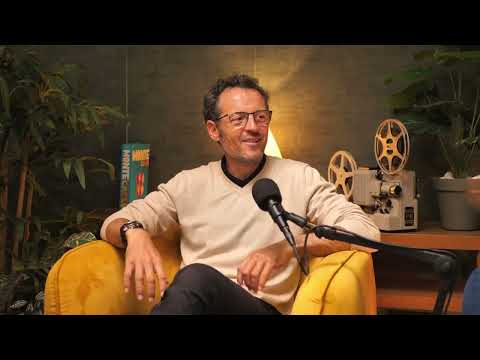
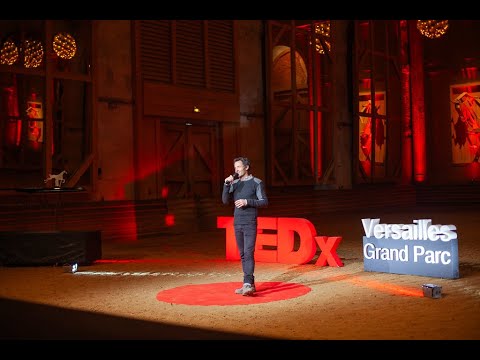

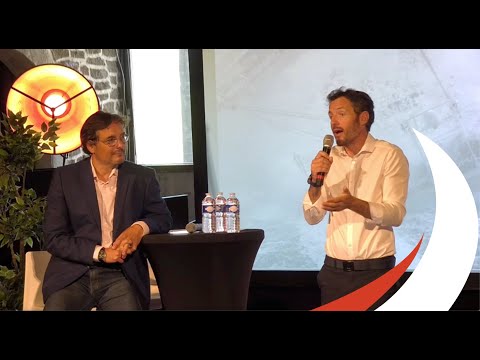
Professional career
- 2023Armateur et skipper de son propre trimaran Wind of Trust
MARSAIL
- 2023Skipper sur The Ocean Race
Team Malizia & Canada Ocean Racing
- 2022Navigateur Trophée Jules Verne
Spindrift
- 2018Coskipper, skipper remplaçant et performer
Charal Sailing Team
- 2014Co-skipper
Maître Coq
- 2012Master de recherche en psychosociologie du sport et management
Université d'Aix-Marseille
His conferences
Deciding in a Complex and Uncertain Environment: Lessons from Offshore Racing by Christopher Pratt
In offshore racing as in leading a company, decisions are rarely made with all the cards on the table. Data is either lacking or overwhelming, the context shifts, and one must still make a call, often alone, unsure of being right. In this conference, I share the method I have built over nearly 25 years of racing and refined through academic research, to help leaders make better decisions when the benchmarks disappear.
I start by dispelling two costly illusions: that of the visionary decision-maker who sees before everyone else, and that of intuition being sufficient to guide. A good decision is neither magic nor pure feeling; it is experience put into method. I provide participants with a simple framework to analyze each of their difficult decisions through three levers they can truly act upon: themselves and their understanding of their own functioning, their organization and resources, and the environment in which they operate.
From there, I show how to decide quickly without deciding poorly: prioritizing the essentials rather than trying to foresee everything, deciding at the right time and level, and then sticking to it to free up mental energy instead of burning it doubting. And how to decide collectively without drowning, to reduce blind spots without diluting responsibility.
Participants leave with a concrete and transferable method by Monday morning, to regain control over even their most difficult decisions.
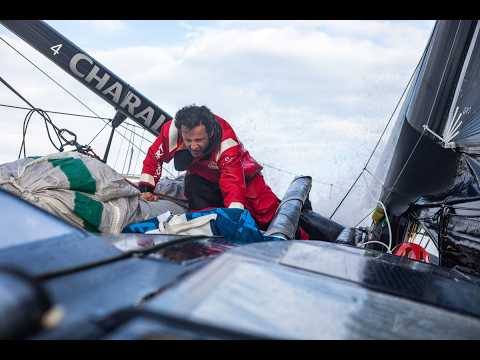
Facing the crisis: what a nighttime capsizing in the middle of the Atlantic taught me about resilience
No leader chooses their crises, but they can choose how to face them. At sea, uncertainty is not the exception, it is the daily reality: we navigate by sight, and crisis is part of the scenery. I experienced mine in its most brutal form, a capsizing in the middle of the night in the Atlantic, with a nine out of ten chance that it would end badly. What I took from it is not a tale of heroism, it is a method, and it is this that I share with leaders to hold on when the pressure rises.
I start from a paradox that sailors know well: we plan extremely rigorously, not to freeze the action, but to be able to deviate from it at the right moment. The more precise the plan, the better we know how to detach from it without panicking. I draw transferable benchmarks directly applicable in business. First, a crisis procedure is written in calm, when we are still clear-headed, never in the storm. Then, in the heart of the crisis, we execute what has been prepared: it is not the time to think, it is the time to act. Finally, the debriefing, essential for progress, is never done in the heat of the moment, lest it damage the team's cohesion.
I also show how, in the midst of a storm, we are already preparing for the exit from the crisis, to set the sail again as soon as the sky clears and turn the ordeal into an advantage. Participants leave with concrete benchmarks to anticipate, hold on, and bounce back, nourished by the tools of offshore racing teams and by research on decision-making in extreme environments.
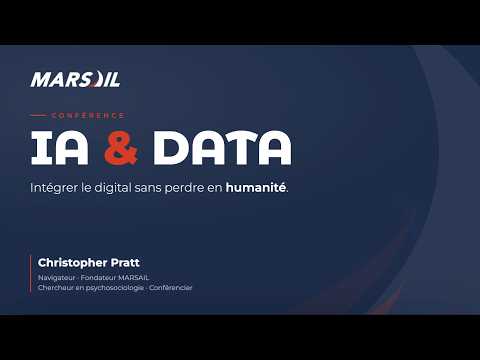
From Adventurous Sailor to Engineer Pilot: Using AI and Data Without Losing One's Humanity
Most of the leaders we support experience the same paradox: cutting-edge tools, and yet a still artisanal method for using them. I know this gap well because my profession has experienced it before them. In less than a decade, competitive sailing has changed worlds: the adventurous sailor, on deck in contact with the elements, has given way to the engineer pilot, locked in a cockpit at the controls of complex systems. On board an IMOCA, three hundred sensors measure the boat and the environment in real-time, and almost none measure the sailor. One pilots with the numbers on a screen, sometimes without even seeing the sea.
In this conference, I share with leaders a method to truly benefit from AI and data without being dispossessed of their judgment. I start from a simple idea: AI does not change the usefulness of data, it multiplies what can be done with it, but incomprehensible data does not become strategic just because a model has processed it. Its relevance always relies on that of the expert analyzing it. The real issue is therefore not what AI can do, but how to feed it intelligently and to answer what question. The need precedes the tool, whereas in business, tools are often purchased before the question has been posed.
I provide concrete benchmarks to decide: to distinguish between data that secures and that which optimizes, to know when to listen to the numbers and when to listen to one's experience, and to remember that the best sensor on board is not instrumented; it is the human, their sensations, and their experiences. Participants leave with a method to integrate AI and data into their decisions without ever delegating what must remain a human choice.
The collective flow: how to move from a collection of experts to a high-performing crew
Every leader has already made this observation: bringing together the best is not enough to create a great team. A collection of experts does not constitute a crew. In offshore racing, where a few live and decide in a confined space under high pressure, this truth becomes evident: what makes the difference is not the sum of talents, but the ability to cooperate. In this conference, I share with leaders what sailing has taught me to transform a group of good individuals into a truly high-performing collective.
I start from the zone of genius, that space where everyone is both excellent and fully motivated. The diversity of backgrounds and personalities becomes a real driver of performance, provided that everyone finds their rightful place. I describe those moments when a collective truly works together, where everyone adjusts their role without needing to say everything: this is what I call flow, and a crew in this state even makes its leader dispensable.
I then show what creates it concretely: clear roles, life rules on board that are enforceable by all, economical and precise communication, and above all this principle that changes everything, the lead goes to the one who knows, not to the one who has the title. I recount how repositioning just one person in their zone of genius can revitalize an entire team. Participants leave with concrete levers for cooperation, transversality, and collective intelligence, directly transferable to their own teams.
Sustainable development and offshore racing: how to combine performance and sobriety to protect our environment
I will start with something a bit disturbing: I am not sure that my profession is ecological. Competitive sailing is a mechanical sport. A racing boat is a concentrate of technology, but also of resources, with a carbon impact that is not neutral. So before asking me how to save the oceans, I prefer to ask the question that too many leaders avoid: are we even legitimate to talk about it? It is from this honesty that I start to help leaders move beyond speeches and truly take action.
In this conference, I refuse greenwashing and easy postures to focus on what matters: behaviors. The real challenge of the transition is not primarily technological. Changing a model is not about changing a tool; it is about changing habits, reflexes, ways of deciding and cooperating, and this is where almost all transformations falter. I show how the world of offshore racing is gradually moving from a sport that consumes to a sport that contributes, through the solutions it transmits, particularly to the merchant navy, to provide leaders with a concrete model of transformation through actions rather than intentions.
But the greatest lesson the sea has taught me is not technological; it is frugality. When you live for weeks at sea with very little, you realize that almost nothing is missing, and you relearn how to define what is essential. Saving the oceans may not be about repairing them; it is about learning to live without damaging them. Participants leave with a different perspective on their transition and on what, in their organization as well as in their life, truly deserves their attention.