


We help you find the right speaker
Share your needs with us: we'll contact you in under an hour.
After a quick exchange, we'll come back with a tailored selection of speakers.
Confirm your choice and sign off with your selected speaker.
Inviting an intelligence artificielle speaker to your corporate event or seminar offers a practical perspective on how AI is reshaping industries and business strategies. These experts translate complex topics like machine learning, automation, and data ethics into actionable insights tailored for executive teams, managers, and employees. Their sessions help demystify AI, address real concerns about implementation, and spark meaningful discussions about the technology’s impact on your sector.
Whether you’re planning a leadership meeting or a company-wide seminar, a well-chosen intelligence artificielle speaker can inspire your teams to innovate, adapt, and make informed decisions. By sharing relevant case studies and emerging trends, they equip your organization with the knowledge to anticipate changes, seize new opportunities, and stay competitive in a rapidly evolving market.
Picture your next conference where the conversation isn’t just about the latest business trends, but how artificial intelligence is already rewriting the rules of decision-making. An intelligence artificielle speaker doesn’t just explain algorithms—they reveal how machine learning is challenging gut instinct and transforming how leaders approach risks and opportunities. This isn’t about distant futures; it’s about choices your teams confront every day, from product innovation to HR forecasting.
By bringing this perspective to your event, you equip your audience to adapt faster than the competition. Attendees gain a practical lens on the 'why' and 'how' of integrating AI insights into their workflow, sparking new ways to think about data that endure long after the applause fades.
It’s easy to get lost in the technical jargon—deep learning, neural networks, natural language processing. But the most memorable intelligence artificielle keynotes cut through the code to spotlight the human stories behind the breakthroughs. A great intelligence artificielle speaker makes room for questions about ethics, trust, and collaboration, reminding audiences that successful AI adoption starts with people, not just platforms.
This angle resonates across departments, from IT to leadership, by showing how empathy and responsibility are non-negotiable in the age of automation. It’s a call to design smarter tools—and smarter teams—for a future where technology and humanity advance together.
Who should tune in when an intelligence artificielle speaker takes the stage? The answer is everyone. From senior executives weighing investment in automation to frontline managers navigating new workflows, AI is upending traditional roles and responsibilities across industries. The best intelligence artificielle keynotes make these shifts tangible, mapping concrete impacts from strategic vision all the way to day-to-day operations.
In practice, this means your event becomes a catalyst for cross-functional dialogue. Attendees see where their own expertise fits into the AI puzzle—and leave with the confidence to champion innovation, no matter their job title.
Not every intelligence artificielle speaker tells the same story. Some provoke, some inspire, and others demystify. The Lespeakers approach goes beyond CVs and TED Talks to identify which speaker will truly connect with your company’s reality—whether you lead a global tech giant or an ambitious SME. Our expertise lies in matching organizational needs to speakers who bring clarity, credibility, and a fresh perspective on AI’s business impact.
This tailored approach ensures your audience doesn’t just hear about AI—they see their own challenges reflected in the keynote. The result? A session that sparks real conversation and unlocks next-step thinking, long after the closing remarks.
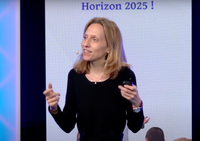
In a world where 91.3% of managerial tasks can be covered by AI, what makes the difference is not the tool, it's the posture. Delphine Zanelli helps managers understand what is changing, what remains, and what will be at stake tomorrow. A speaker and author specialized in management, leadership, and the future of work, with 30 years of field experience, a unique study, and a conviction: not all managers today will b…
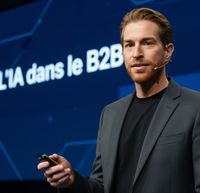
Philippe is an international speaker specializing in innovation strategies and culture. His experience enables companies to succeed in their innovation and transformation programs. His trademark: experiential conferences that demonstrate the value of experimentation, both in idea validation and risk reduction, with an approach that speaks to everyone. Philippe is a certified speaker (the highest category) of the F…
Most corporate clients invest between €3,000 and €10,000 for a high-caliber intelligence artificielle speaker, but rates can vary widely. Speakers with hands-on experience in Fortune 500 or groundbreaking startups may command more, while emerging experts are often more accessible. Consider what you want: a high-level keynote, a panelist, or a practical workshop. Some organizers stretch their budget by booking a shorter session or a virtual format if travel is a factor. The biggest cost surprise? Customization—if you want a speaker to tailor content to your industry or business case, clarify expectations early, as deep prep often comes with a premium.
Start by mapping your audience’s real questions about AI: are they anxious, curious, or already hands-on? A speaker who thrives with C-level execs won’t always connect with field managers. Look for profiles who have faced your audience’s challenges, not just talked about them. Review clips: does the expert explain concepts without jargon, and can they spark real discussion? If you want your audience to leave with practical ideas, prioritize speakers who show concrete use cases relevant to your sector, not just grand visions.
Keynotes set the tone for large groups, but for teams wrestling with how to apply AI, interactive formats land better. Workshops or Q&A-driven talks let participants surface their actual doubts and see immediate relevance. Hybrid events—where the speaker joins remotely—are now common, especially for international experts, but in-person sessions tend to spark more candid questions. A 45–60 minute slot with time for direct audience questions is the sweet spot for engagement, especially if you want to move beyond the basics.
The most common misstep is assuming a technical expert can automatically engage a business audience. We’ve seen brilliant AI researchers lose the room with dense slides or buzzword overload. Another trap: underestimating logistics—AI speakers are often in high demand, so last-minute changes can mean losing your top pick. Avoid generic briefs; share your audience’s specific pain points so the speaker can prepare relevant stories and examples. A tailored brief almost always leads to stronger feedback post-event.
Ask for examples of talks they’ve given to mixed or non-technical groups. The best intelligence artificielle speakers can translate complex ideas into relatable stories—a good sign is when previous clients mention ‘clear explanations’ or ‘made it feel relevant’ in their feedback. Watch a few clips: if you catch yourself picturing your own team in their stories, that’s a strong fit. Never hesitate to ask for references from similar past events; these conversations reveal how adaptable the speaker really is.
For in-demand AI experts, three to six months’ notice is standard, especially if your event falls during peak conference seasons (spring and autumn). Some speakers have openings on shorter notice, but your options dwindle fast—especially for those who also advise or teach. If you’re set on a specific topic or want a customized session, early booking gives the expert time to shape content around your goals. The sooner you reach out, the more likely you can align schedules and secure prep calls.
Yes, but the depth of customization varies. The most impactful sessions draw on actual industry challenges—from retail automation to financial risk models—rather than generic trends. When you brief the speaker, share concrete examples, business models, or dilemmas your teams are facing. Many speakers will build in case studies or even interview a couple of your employees beforehand. The result: your audience hears AI in the language of their own job, not just as a distant innovation.
Most intelligence artificielle speaker sessions run 30 to 60 minutes, with 45 minutes being the sweet spot for attention and impact. Add 10–15 minutes for Q&A if you want real interaction—often, the best insights come from off-the-cuff audience questions. For workshops or deep dives, allow 90 minutes to two hours. If you try to squeeze too much into a short slot, nuance gets lost; if you go over an hour without breaks or dialogue, attention drops fast, no matter how sharp the expert.
Share your needs with us: we'll contact you in under an hour.
After a quick exchange, we'll come back with a tailored selection of speakers.
Confirm your choice and sign off with your selected speaker.